
What to Pack for Japan
WHAT TO PACK FOR JAPAN
Packing for Japan ought to be relatively straightforward.
You're travelling to a country where almost anything you forget can be bought once you arrive, and unless your journey involves serious walking or winter conditions, you don't need specialist equipment.
Yet Japan does present a few packing questions that don't necessarily arise on other holidays.
You'll probably walk more than you expect. You may need to remove your shoes several times during the day. Summer humidity can make temperatures feel very different from the same numbers in Britain, while a journey through several regions can involve surprisingly different weather. If you're moving regularly between hotels, the size of your suitcase begins to matter too.
So rather than giving you an enormous packing list, it's more useful to think about how you'll actually be travelling through Japan.
Pack for the journey, not simply the weather forecast
The first consideration is where you're going and when.
Japan stretches a remarkable distance from north to south, which means there isn't really a single Japanese climate. Hokkaido and Okinawa can be experiencing completely different conditions at the same time, while mountain areas may be considerably cooler than the cities below them.
Spring and autumn are particularly suited to layers. Days can be pleasantly warm while mornings and evenings are cooler, and conditions may change as you travel through the country.
Summer is different. Much of Japan becomes hot and very humid, particularly in July and August. British visitors sometimes look at the temperature before travelling and underestimate what that humidity will feel like after several hours exploring Tokyo or Kyoto. Lightweight, breathable clothing matters considerably more than dressing for the equivalent temperature at home.
Winter depends enormously on the route. Tokyo can have cold, clear days while northern Japan and the mountains are experiencing deep snow. A February journey through Hokkaido therefore requires very different packing from a February holiday concentrating on Tokyo, Kyoto and Hiroshima.
Rain is possible throughout the year, and there are periods when it's more likely, but ordinary visitors don't need to equip themselves for an expedition. A lightweight waterproof layer is useful, particularly for rural journeys or walking, while umbrellas are extremely easy to buy once you're there.
Think particularly carefully about your shoes
If there's one thing we'd prioritise, it's comfortable footwear.
Japan's excellent public transport can disguise how much walking a holiday actually involves. Large stations add distance without you necessarily noticing it, while Kyoto's temples, gardens and historic districts can produce days involving many miles on foot.
Comfort matters.
There is also a particularly Japanese reason for choosing your shoes carefully: you'll sometimes need to remove them.
Ryokan are an obvious example, but shoes may also come off at temples, traditional restaurants and other buildings. Something comfortable that's relatively easy to take on and off therefore works particularly well.
And take socks you're happy for other people to see. You may spend considerably more time standing in them than you would on a normal holiday in Britain.
Otherwise, there's no need to overthink clothing. Japan may be a well-dressed country, but ordinary sightseeing doesn't require formal clothes. Something smarter can be useful for a special dinner or particular hotel, but comfort should usually take priority during the day.
Nor do you need anything special for a ryokan. A yukata, the lightweight robe commonly worn around traditional inns and onsen, is normally provided. Public onsen are generally used without swimwear, so a swimsuit isn't required specifically for bathing either.
The size of your suitcase matters more than you might expect
This is one area where we'd actively resist the temptation to use every kilogram of your airline baggage allowance.
A large suitcase is perfectly manageable if you're staying in one hotel. It becomes rather less appealing when your journey involves several destinations, railway stations, local trains and perhaps a night somewhere rural.
Hotel rooms can also be more compact than British travellers expect, particularly in Tokyo. Two enormous cases opened on the floor can occupy a surprising amount of the available space.
Japan does, however, have an excellent answer to this.
Luggage forwarding allows larger cases to travel separately between hotels while you take a smaller bag for part of the journey. This can work particularly well around a ryokan stay or a short diversion somewhere that would be awkward with all your luggage.
If your itinerary uses luggage forwarding in this way, a small overnight bag becomes extremely useful. You can take what you need for a night or two while your main case continues further along the route.
There is another reason not to leave Britain with a completely full suitcase.
Japan can be a dangerous place for spare luggage capacity.
Even people who don't consider themselves enthusiastic shoppers can find themselves buying ceramics, stationery, clothes, kitchenware or things they had absolutely no intention of wanting before they saw them.
Leaving some space at the beginning is considerably easier than trying to create it at the end.
There are a few things worth sorting out before you leave
Most forgotten items can simply be bought in Japan.
Medication is different.
Japan has its own rules about medicines that can be brought into the country, and some ingredients found in British prescription and over-the-counter products are restricted. If you take medication regularly, this is something to check properly before travelling rather than when you're packing the night before.
Depending on the medicine and quantity, documentation or prior permission may be required. Keep prescription medication appropriately packaged and make sure you've established what applies to you well before departure.
Your phone is another thing worth sorting out in advance, although for very different reasons.
You'll probably use it frequently for maps, translations, photographs and general information while travelling. Check what your UK mobile provider charges for data in Japan and decide whether its roaming package or an eSIM makes more sense for you. A small portable power bank can also be useful on days when you're using your phone heavily.
You don't need to arrive with huge amounts of cash. Card and electronic payments are increasingly common, particularly in the cities, although cash remains useful at smaller establishments, temples and in rural areas. Having access to both is more useful than relying entirely on either.
A small, comfortable day bag is useful for carrying the ordinary things you'll accumulate during a day out: water, a light layer, phone and perhaps a little rubbish. Japan has fewer public bins than many British visitors expect, so occasionally carrying an empty bottle or wrapper until you find somewhere appropriate to dispose of it is perfectly normal.
Don't pack for every possible eventuality
This is probably the most useful advice of all.
You don't need to anticipate every possible thing that could happen during a two-week holiday.
Japan is extremely good at solving small practical problems.
Convenience stores are everywhere in the cities. Pharmacies and department stores sell an enormous range of everyday products, and if you've forgotten an umbrella, charging cable, toiletries or an extra T-shirt, finding a replacement is unlikely to become a significant part of your holiday.
So the objective isn't to create the perfect Japan suitcase.
It's to take the things that would be inconvenient not to have, without burdening yourself with everything you might conceivably need.
Someone walking part of the Nakasendo needs different footwear and clothing from somebody concentrating on cities and art museums. A winter journey through Hokkaido requires very different preparation from a spring journey between Tokyo and Kyoto. And somebody moving through six different hotels has much more reason to think carefully about luggage than someone staying in two.
That's why we don't think there's a definitive packing list for Japan.
Think about your route, the season and what you'll actually be doing. Take comfortable shoes, adaptable clothing and luggage that you're happy to move around with, and leave yourself a little space for whatever Japan persuades you to bring home.
Everything else is mostly common sense.
And if you do forget something ordinary, Japan is a particularly easy place to discover that you didn't really need to pack it after all.
10
Aug
What Is Really Worth Seeing in Japan?
Japan has far too much to experience in a single holiday, and there is no universal list of places everybody needs to see. The more useful question is what deserves a place in your particular journey.
09
Aug
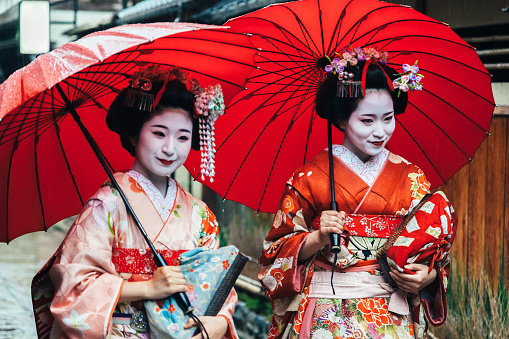
Geisha, Geiko and Maiko: What Visitors Should Know
Geisha are one of the most recognisable but frequently misunderstood parts of Japanese culture. Understand the difference between geisha, geiko and maiko, the traditions behind their profession and how visitors can experience this part of Japanese culture respectfully.