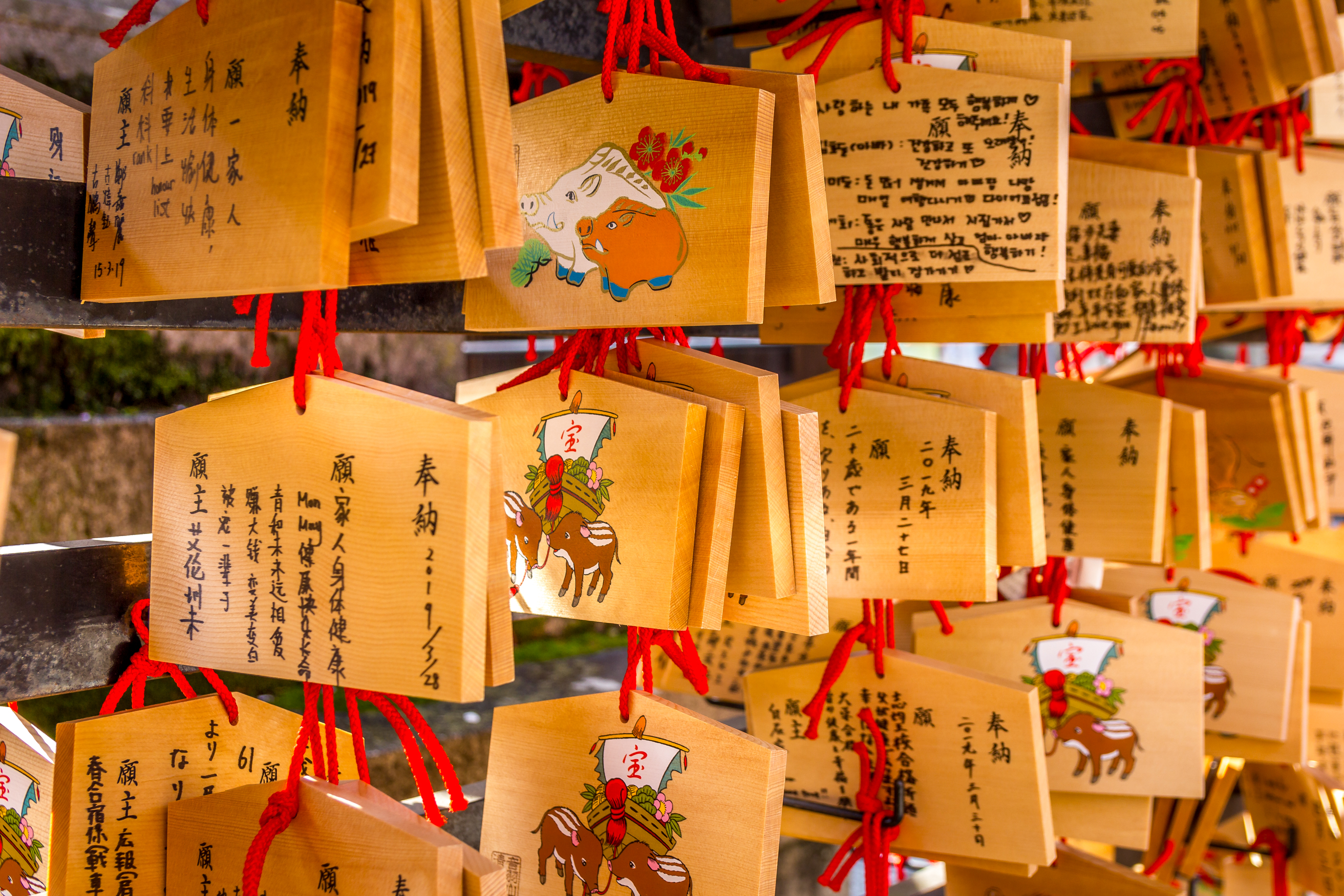

What Is Really Worth Seeing in Japan?
WHAT IS REALLY WORTH SEEING IN JAPAN?
Ask ten people what you absolutely must see on a first visit to Japan and you'll probably end up with a list long enough to fill a month.
Tokyo and Kyoto will almost certainly be there. So will Mount Fuji, Hiroshima, Miyajima, Nara and Osaka. Then somebody will tell you not to miss Kanazawa, another person will insist that Takayama was the highlight of their trip, and before long you're wondering whether you can somehow fit Naoshima, Koyasan and the Nakasendo into the same two weeks.
This is one of the difficulties with planning Japan. There are very few bad suggestions on that list. The problem comes when you start believing that because somewhere is worth visiting, you ought to visit it.
We don't think Japan really has a definitive list of places that everybody needs to see.
There are certainly places of enormous importance, and some of the country's most famous sights deserve their reputation. But what is worth including in a particular journey depends on the person taking it, how much time they have and what they will have to leave out in order to make room for it.
Kyoto is a good example. It has become exceptionally busy in recent years, and some of its best-known areas can feel crowded at particular times of day. That has led to plenty of articles suggesting alternatives to Kyoto or encouraging visitors to seek out somewhere less discovered.
For most first-time visitors, we don't think that's particularly helpful.
Kyoto is popular because it contains an extraordinary concentration of Japanese history and culture. Its temples and gardens are part of that, but so are its traditional neighbourhoods, food, crafts and the sense of a city in which centuries of Japanese culture continue to exist alongside ordinary modern life. If those things interest you, Kyoto deserves time rather than substitution.
The question is how much time, what you do with it and what else you choose to put around it.
Someone fascinated by gardens and traditional architecture could quite reasonably spend longer in Kyoto than somebody whose real interests lie in contemporary art and design. The second traveller might still want to experience Kyoto, but perhaps Naoshima becomes important enough to justify the journey into the Seto Inland Sea. Someone who loves walking may look at those same days and decide that travelling along part of the Nakasendo matters more.
None has made the better choice. They are simply interested in different versions of Japan.
That sounds obvious, but it's remarkably easy to lose sight of once you begin researching a trip. Online recommendations tend to accumulate. You rarely see an article entitled Ten Excellent Places You Can Happily Leave Out of Your Japan Holiday. Everything is presented as something you should add.
Eventually the itinerary becomes a negotiation with the calendar.
This is why we're wary of the idea of the Japanese "hidden gem" as well. Going somewhere less visited can be wonderful, but obscurity isn't a quality in itself. We wouldn't send somebody several hours out of their way merely so they can say they experienced somewhere most tourists don't.
Smaller and less visited places become interesting when they add something the journey needs.
After several days in Tokyo, for example, moving somewhere quieter can completely change the feeling of the holiday. The station may be smaller, the landscape becomes more noticeable and the accommodation itself might become part of the reason for being there. A night in an onsen town or ryokan can provide a pause between cities. Walking between old post towns can turn a transfer from one destination to another into part of the experience. A temple stay might make sense for somebody genuinely interested in Buddhism, while for somebody else it could feel like an unnecessary detour.
The fact that a place is unusual doesn't make it right.
The same is true of famous places.
Mount Fuji carries enormous significance in Japan and is understandably something many visitors desperately want to see. For them, it can be entirely reasonable to shape part of the journey around the possibility of seeing it properly. But Fuji is also a mountain with its own weather. It doesn't appear on command, and there are journeys where adding an extra destination simply to pursue a view of it isn't the best use of limited time.
Hiroshima raises a different question. Its Peace Memorial Park and museum aren't places people visit because they are entertaining, but they can add an important dimension to understanding modern Japan. Combined with the city itself and nearby Miyajima, Hiroshima can justify several days of a journey. Yet if somebody has ten nights in Japan, including it inevitably means reducing the time available elsewhere.
That trade-off is the part that tends to disappear from lists of must-see places.
Every time you add somewhere, something else changes.
Adding another destination can mean checking out of a hotel, getting to a station, travelling, finding the next hotel and settling in again. None of those things is particularly difficult in Japan, but they still consume part of the day. If adding Takayama means losing two nights in Kyoto, the useful question isn't whether Takayama is worth visiting. It plainly is. The question is whether visiting it is worth having less time in Kyoto.
We make the same judgement about experiences.
It is perfectly possible to visit Japan and spend most of the holiday moving between famous sights. You can see temples, shrines, castles, gardens and museums and return home with an impressive collection of photographs.
But some of the experiences people remember most aren't famous sights at all.
It may be the evening at a ryokan when they first use an onsen and then sit down to a seasonal Japanese dinner. It could be walking through countryside between two small towns, spending a morning with somebody who helps them understand Japanese gardens, or discovering a neighbourhood they hadn't planned to visit because they had enough free time to wander.
Those moments need room.
And this is perhaps the biggest reason we resist the idea of trying to see everything. A crowded itinerary doesn't merely make the holiday tiring. It can squeeze out the unplanned experiences that allow you to begin enjoying Japan rather than constantly moving on to the next thing.
There is also no reason for a journey to concentrate exclusively on the Japan of temples, ryokan and traditional culture.
Tokyo is as authentically Japanese as Kyoto. Contemporary architecture, fashion, art, manga, music, department stores and the extraordinary infrastructure of a modern Japanese city aren't distractions from the "real" Japan. They are part of it.
One of the great pleasures of travelling through the country is moving between these different worlds. You can experience something centuries old in the morning and something startlingly contemporary that afternoon without either feeling out of place.
Travel beyond the major cities and the country changes again. Mountains cover much of Japan, and walking routes, forests, volcanic landscapes, coastlines and islands can become an important part of a journey for somebody who enjoys being outdoors. For another traveller, food might provide the thread connecting the trip, with regional dishes and local ingredients revealing differences between places that aren't obvious on a map.
This is why two first trips to Japan don't need to look alike.
Tokyo and Kyoto provide an excellent foundation for many people, particularly when visiting for the first time, but what happens around them should depend on the traveller rather than a standard formula.
If you have two weeks, there will be things you miss. Quite a lot of things, in fact.
That's not a failure of planning.
Even with three or four weeks, there will be entire regions of Japan you barely touch. Trying to solve that problem by moving more quickly usually produces a less satisfying journey, not a more complete one.
So when we're deciding whether somewhere is worth seeing, we're not simply asking whether the place itself is good.
We're asking what it adds, how naturally it fits with the rest of the route, how much time it deserves and what has to be sacrificed to include it. Most importantly, we're asking whether it belongs in this particular person's Japan.
That may result in an itinerary containing many of the country's famous places. It may also include somewhere the traveller had never heard of before we began planning.
Both are perfectly good outcomes.
The objective isn't to return from Japan having completed somebody else's list of essential sights. It's to return feeling that the places you chose were worth the time you gave them.
And if there are still dozens of places you wish you'd had time to see, that's entirely normal.
Japan is much better approached as a country you can never quite finish.
09
Aug
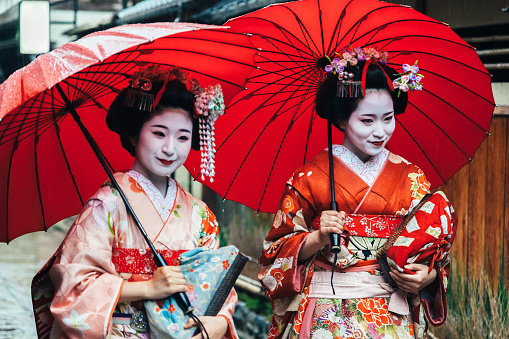
Geisha, Geiko and Maiko: What Visitors Should Know
Geisha are one of the most recognisable but frequently misunderstood parts of Japanese culture. Understand the difference between geisha, geiko and maiko, the traditions behind their profession and how visitors can experience this part of Japanese culture respectfully.

09
Aug
What to Pack for Japan
Packing for Japan doesn't require a specialist wardrobe, but a few choices can make the journey considerably easier. From comfortable shoes and seasonal clothing to luggage size, medication and what you can simply buy when you arrive, here's what is genuinely worth thinking about.