
Staying in a Ryokan and Visiting an Onsen in Japan
STAYING IN A RYOKAN AND VISITING AN ONSEN IN JAPAN
For many people, staying in a traditional ryokan is one of the experiences they most look forward to in Japan.
And rightly so.
At its best, a ryokan stay brings together several parts of Japanese culture in a way that few other experiences can. The room, food, bathing and hospitality are all connected, and the pace can feel very different from staying in a conventional hotel.
But there's something worth understanding before you book one.
A ryokan isn't simply a Japanese hotel.
Treat it as one and you can easily miss much of what makes the experience special.
The difference often becomes apparent soon after you arrive.
You may remove your shoes at the entrance. Your room might have tatami flooring, low furniture and sliding screens. Instead of a conventional bed waiting for you, futons may be laid out on the tatami later in the evening, often while you're having dinner.
You'll also often be given a yukata, a lightweight cotton robe traditionally worn after bathing and for relaxing. In many ryokan it's perfectly normal to wear your yukata around the property, to dinner and when visiting the baths.
Then there's the onsen.
An onsen is a Japanese hot spring, and bathing in one can be one of the great pleasures of travelling through Japan. Natural hot springs are found throughout the country, and some towns have developed around them over hundreds of years.
It's worth understanding that a ryokan and an onsen aren't the same thing.
A ryokan is a traditional Japanese inn. An onsen is a natural hot spring. Many ryokan, particularly those in hot spring areas, have their own onsen baths, but not every ryokan does. Equally, you don't need to stay in a ryokan to experience an onsen.
Throughout Japan you'll find public onsen where you can simply pay to enter and bathe.
In some traditional hot spring towns, the public baths are an important part of the destination itself. Kinosaki Onsen is a particularly good example. Visitors staying locally can walk through the town in yukata and geta, traditional wooden sandals, visiting its different public bathhouses.
It's a very different experience from stepping into a private bath attached to your room.
Public onsen are shared spaces and, for first-time visitors, the etiquette can initially feel rather unfamiliar. In most traditional onsen, the baths are separated for men and women. You undress before entering the bathing area, wash and rinse yourself thoroughly before getting into the water, and don't wear swimwear.
You'll usually take a small towel into the bathing area, but the towel doesn't go into the bath. You'll often see people folding it and placing it on their head while they soak, although there's no requirement to master that particular technique on your first attempt.
Once you understand the routine, it's surprisingly straightforward.
For some travellers, however, communal bathing simply isn't appealing.
That doesn't mean missing the experience altogether.
Many ryokan offer private onsen baths, sometimes called kashikiri or reservable baths, which can be used privately for a set period. Other properties have guest rooms with their own bath. These can be particularly appealing to couples and families who would like to bathe together, as the usual public baths are generally separated by sex.
There is an important distinction here too.
A beautiful outdoor bath isn't automatically an onsen.
The word refers to naturally sourced hot spring water meeting Japan's legal definition, rather than simply the style of the bath. If having a genuine onsen is important to you, it's worth checking what the property actually offers rather than relying on photographs alone.
Tattoos are another area where a little knowledge beforehand can prevent an awkward moment.
Historically, many Japanese bathing establishments prohibited tattoos because of their association with organised crime. Attitudes are changing and increasing numbers of onsen accept tattooed visitors, but policies still vary considerably. Some permit small tattoos if they're covered, some welcome tattoos without restriction and others continue to refuse entry.
It's therefore much better to check the individual property's policy in advance rather than assume. A private bath can sometimes provide an alternative where public bathing restrictions apply.
Food is another important part of many ryokan stays.
At a traditional ryokan, dinner isn't simply something available in the restaurant downstairs. It can be central to the entire experience.
A multi-course kaiseki dinner may include numerous small dishes reflecting the season and the region. Presentation is important, but so are ingredients, texture and the progression of the meal. Breakfast is frequently Japanese too, perhaps including rice, grilled fish, miso soup, vegetables and pickles rather than the breakfast most British visitors are accustomed to eating at home.
For travellers interested in Japanese food, this can become one of the highlights of the journey.
It can also make dietary requirements more complicated.
Traditional cooking may use ingredients that aren't immediately obvious from the finished dish. Dashi frequently contains fish, for example, while soy sauce commonly contains wheat. Vegetarian, vegan, gluten-free and allergy requirements therefore need to be discussed with the property before booking rather than assuming that every kitchen will be able to adapt its menu.
There's another detail that catches some first-time visitors by surprise.
Arrival time matters.
At a conventional hotel, arriving at eight in the evening might be completely unremarkable. At a ryokan serving dinner, it can be far too late.
Meals are often prepared around a particular serving time, and some properties require guests to arrive during a specified check-in window. Arriving late can mean missing dinner altogether.
That changes the way we think about the journey to the ryokan.
It shouldn't simply be squeezed onto the end of a long sightseeing day. Ideally, you arrive with enough time to settle into your room, change into your yukata, have a bath and enjoy the property before dinner.
The point is to experience it, not merely sleep there.
Comfort deserves some thought as well.
Tatami rooms and futons aren't necessarily right for everybody. Getting down to floor level can be difficult for someone with reduced mobility, while some older ryokan have stairs, uneven surfaces or limited lift access. There are also ryokan offering Western-style beds or rooms combining Japanese and Western features, so choosing traditional accommodation doesn't necessarily mean sacrificing physical comfort.
More isn't necessarily better either.
First-time visitors sometimes assume that because ryokan are traditionally Japanese, staying in them throughout the holiday will create a more authentic experience.
We wouldn't usually recommend it.
Part of what makes a ryokan memorable is the contrast.
After several days exploring Tokyo or Kyoto, travelling somewhere quieter, changing into a yukata, soaking in an onsen and sitting down to a carefully prepared dinner can completely alter the rhythm of the holiday.
Do it every night and some of that distinction inevitably disappears.
For many travellers, one exceptional ryokan stay is more memorable than several ordinary ones.
There are also enormous differences between ryokan themselves. Some are simple family-run inns that have changed relatively little over generations. Others combine traditional Japanese hospitality with contemporary architecture, private onsen and sophisticated dining.
The most expensive isn't automatically the best choice.
As with so much of planning Japan, what matters is finding the experience that suits you and putting it in the right place within the journey.
Because a ryokan stay and an onsen aren't things you need to tick off a list.
Experienced properly, they can introduce you to a side of Japan that feels quite different from anything you'll encounter in its cities.
And sometimes the memory that stays with you isn't the room at all.
It's walking back from a public bath in your yukata, soaking in an outdoor onsen as the air turns cold, or sitting down to dinner with nowhere else you need to be.
10
Aug
What Is Really Worth Seeing in Japan?
Japan has far too much to experience in a single holiday, and there is no universal list of places everybody needs to see. The more useful question is what deserves a place in your particular journey.
09
Aug
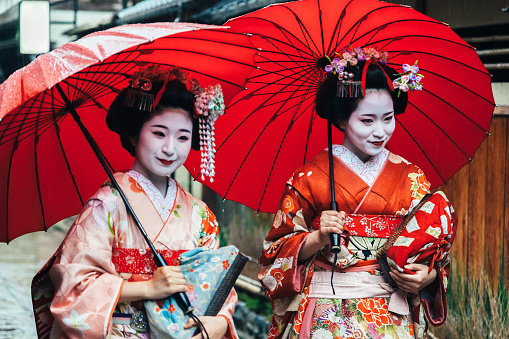
Geisha, Geiko and Maiko: What Visitors Should Know
Geisha are one of the most recognisable but frequently misunderstood parts of Japanese culture. Understand the difference between geisha, geiko and maiko, the traditions behind their profession and how visitors can experience this part of Japanese culture respectfully.