KYUSHU

Volcanoes, onsen and a different side of southern Japan
Kyushu is Japan's southernmost main island, a region of active volcanoes, hot springs, historic cities, dramatic coastlines and distinctive regional food.
It can feel noticeably different from the better-known Tokyo–Kyoto corridor. There are major cities, but much of Kyushu's appeal comes from travelling between them: through volcanic landscapes, smaller onsen towns and rural areas where the journey itself becomes part of the experience.
Kyushu is large enough to deserve proper time. Rather than adding one or two disconnected stops, it works particularly well when several days can be devoted to exploring a coherent part of the island.
Fukuoka
Fukuoka is Kyushu's largest city and one of the easiest gateways to the region.
It is particularly known for food. Hakata ramen originated here, while the city's yatai food stalls remain a distinctive part of the evening landscape.
Fukuoka feels more compact and manageable than Tokyo or Osaka and can be an enjoyable place to begin or finish a journey through Kyushu.
It is also exceptionally well connected, with Shinkansen services running south through the island and an airport remarkably close to the city centre.
Nagasaki
Few Japanese cities have a history quite like Nagasaki.
For centuries it was one of Japan's principal points of contact with the outside world, particularly during the period when the country severely restricted foreign trade. Dutch, Chinese and later Western influences remain visible in the city's architecture, food and culture.
Nagasaki is also inseparable from the atomic bombing of 9 August 1945. The Peace Park and Atomic Bomb Museum provide an important account of the destruction and its human consequences.
The combination of these histories makes Nagasaki very different from Hiroshima. We wouldn't regard the two cities as interchangeable simply because both experienced atomic bombing.
The city's hillside setting around its harbour also gives it a character unlike most other Japanese cities.
Aso and central Kyushu
The landscape around Mount Aso is one of the strongest reasons to travel through central Kyushu.
Aso sits within one of the world's largest volcanic calderas, creating an enormous landscape of mountains, grasslands and farmland.
This is somewhere where private transport or a hire car can be particularly valuable. It allows the journey to follow the landscape rather than being determined entirely by railway lines and bus timetables.
Volcanic activity can affect access to particular areas, so plans sometimes need flexibility.
For travellers who enjoy landscapes and being outdoors, central Kyushu provides a striking contrast to Japan's major cities.
Kurokawa Onsen
Kurokawa is a small hot-spring town in the mountains of Kumamoto Prefecture.
Rather than being dominated by large hotels, it is known for traditional ryokan and outdoor baths spread around a compact riverside settlement. Guests can use a bathing pass to visit selected baths at different ryokan around the town.
It works particularly well as somewhere to stop rather than somewhere to sightsee.
Arriving in the afternoon, enjoying the onsen, having dinner at the ryokan and leaving the following morning can provide a welcome change of pace within a journey through Kyushu.
The choice of ryokan matters, as does understanding what an onsen stay involves. For the right traveller, it can be one of the highlights of the region.
Kagoshima and Sakurajima
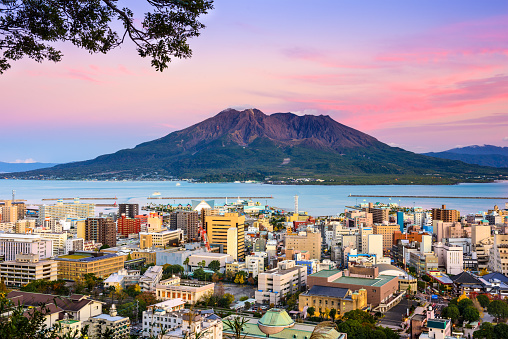
At the southern end of Kyushu, Kagoshima looks across the water towards Sakurajima, one of Japan's most active volcanoes.
The volcano remains an everyday presence in the city and can be reached easily by ferry.
Kagoshima also provides access to southern Kyushu and has a distinctive food culture, including kurobuta pork and dishes influenced by the region's warmer climate.
Further south, Ibusuki is known for its unusual geothermal sand baths, where visitors are buried up to the neck in naturally heated volcanic sand before bathing in an onsen.
Yakushima
For travellers particularly interested in walking and nature, Yakushima can justify travelling considerably further.
The island south of Kyushu is known for its ancient cedar forests, mountains and exceptionally high rainfall. Some of its yakusugi cedar trees are thousands of years old.
Walking ranges from relatively accessible forest trails to demanding full-day mountain routes.
Yakushima isn't a casual addition. Reaching the island, allowing for weather and giving it enough time can require several days. But for someone whose interests genuinely lie in forests, walking and the natural environment, it can become a central part of the journey rather than an excursion from somewhere else.
How Kyushu fits into a journey
The Kyushu Shinkansen makes travel between Fukuoka, Kumamoto and Kagoshima straightforward. Other parts of the island require local trains, buses, private transfers or a car.
That difference matters when planning.
A route that combines Fukuoka, Nagasaki, Aso, an onsen stay and Kagoshima can work extremely well, but it needs enough time. Trying to cover the same ground in four or five days would involve far too much travelling.
Kyushu can be reached by Shinkansen from Hiroshima and western Honshu, or by air from Tokyo and other Japanese cities. This makes it possible either to incorporate it into a longer journey heading west or treat it as a distinct section of the holiday.
Should Kyushu be part of your journey?
Kyushu is particularly rewarding for travellers interested in food, volcanic landscapes, onsen, history and spending time outside Japan's most heavily visited destinations.
It can work on a first journey, but we wouldn't normally add it simply to increase the number of regions visited. For a shorter holiday, there is usually more than enough to experience between Tokyo, central Japan and Kansai.
With more time — or for somebody returning to Japan — Kyushu becomes a much stronger proposition.
And for travellers whose interests naturally point towards Nagasaki's history, Aso's landscapes, traditional onsen or Yakushima's forests, there may be every reason to build a substantial part of the journey around the island.
Kyushu works best when it isn't an extension at the end of a holiday, but a part of Japan you've made proper time to experience.
Gallery: