
KANSAI

The historic heart of Japan
Kansai contains some of Japan's most important historic and cultural destinations. Kyoto, Osaka and Nara are all here, alongside castle towns, pilgrimage routes, temple communities and the shores of Lake Biwa.
For most first-time visitors, Kansai will form a significant part of the journey. The challenge is rarely deciding whether to include it. It is deciding how to experience it without trying to see everything.
Kyoto in particular rewards time and careful planning. Kansai works best when it isn't treated as a succession of famous sights to be ticked off.
Kyoto
Kyoto was Japan's imperial capital for more than a thousand years and contains an extraordinary concentration of temples, shrines, gardens, traditional neighbourhoods and cultural traditions.
It is also one of the busiest destinations in Japan.
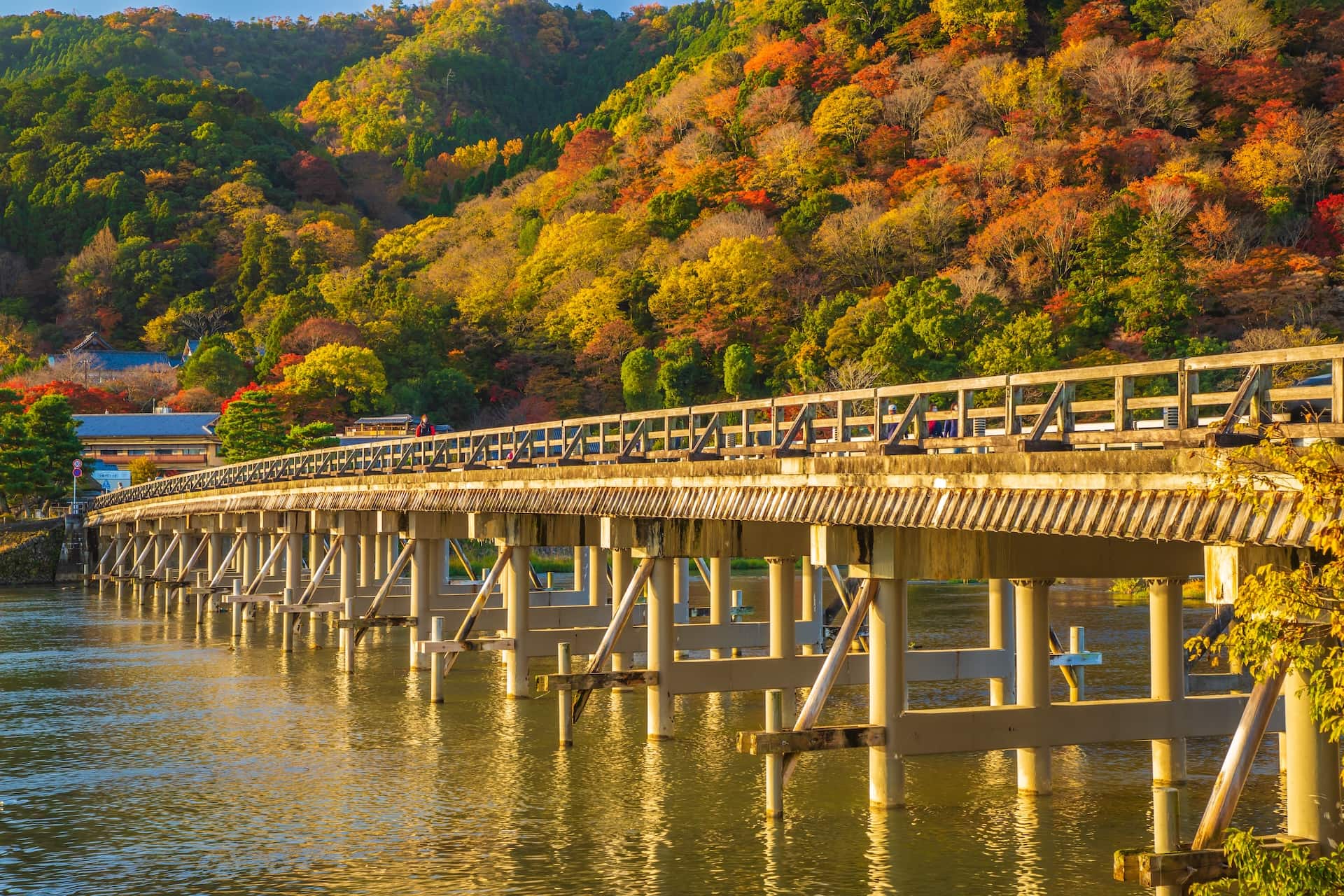
Places such as Fushimi Inari, Kiyomizu-dera and the Arashiyama bamboo grove are famous for good reason, but visiting Kyoto well requires more thought than simply working through a list of its best-known attractions.
Timing matters. Location matters. And choosing what not to see can be just as important.
Some of Kyoto's most enjoyable experiences can come from smaller temples, gardens and neighbourhoods away from the busiest routes. A knowledgeable private guide can be particularly valuable here, providing historical and cultural context while helping you understand a city that can otherwise feel like an overwhelming collection of sights.
We generally prefer to give Kyoto enough time rather than trying to experience it in two hurried days.
Osaka
Osaka provides a very different experience.
More informal and energetic than Kyoto, it is a city particularly associated with food and entertainment. Areas such as Dotonbori are bright, busy and unmistakably urban, while neighbourhoods elsewhere reveal a much more everyday side of the city.
Osaka has excellent restaurants at almost every level, from small counters and izakaya to high-end dining. Okonomiyaki and takoyaki are among the foods most closely associated with the city, but its appeal goes considerably beyond a handful of famous dishes.
Whether you need to stay in both Osaka and Kyoto depends on the journey. They are close enough to travel between easily, and sometimes changing hotels adds little. For other travellers, experiencing Osaka in the evening makes staying there worthwhile.
It is a good example of why itinerary decisions should be based on the experience you want rather than simply the number of places you can include.
Nara
Nara became Japan's first permanent capital in the eighth century and contains some of the country's most important early Buddhist sites.
Todai-ji, with its enormous bronze Buddha, is the best known, while the deer roaming Nara Park have become almost as famous as the temples themselves.
But there is considerably more to Nara than those two things.
Moving away from the busiest parts of the park reveals smaller temples, old neighbourhoods, forest and walking routes. For travellers with a deeper interest in Buddhism or early Japanese history, Nara can deserve more than the standard half-day visit.
For many people, however, it works extremely well as a day trip from Kyoto.
Beyond Kyoto, Osaka and Nara
Kansai becomes particularly interesting when you look beyond its three best-known cities.
Uji, between Kyoto and Nara, has a long association with tea and is home to Byodo-in, whose Phoenix Hall appears on the Japanese ten-yen coin.
Omi-Hachiman, beside Lake Biwa, developed as a merchant town and offers historic streets, canals and access to the lake in a setting that receives far fewer overseas visitors than nearby Kyoto.
Himeji is home to Japan's finest surviving feudal castle and can fit naturally into a journey heading west towards Hiroshima.
Further south, the Kii Peninsula offers something entirely different.
Koyasan and the Kumano Kodo
Koyasan is one of the most important centres of Shingon Buddhism in Japan.
Staying in temple accommodation can provide an opportunity to experience morning prayers, Buddhist vegetarian cuisine and the atmosphere of this mountain community after many day visitors have left.
Further south, the ancient pilgrimage routes of the Kumano Kodo cross the forested Kii Peninsula between sacred sites associated with the Kumano shrines.
This is a very different Kansai from Kyoto and Osaka.
Walking sections of the Kumano Kodo requires time and planning, and transport around the peninsula is considerably slower than travelling between the major cities. It shouldn't be casually added to an already full itinerary.
For travellers interested in walking, religion and rural Japan, however, giving several days to the peninsula can become one of the most distinctive parts of the journey.
How Kansai fits into a journey
Kansai connects extremely easily with Tokyo by Shinkansen and naturally leads west towards Hiroshima and the Seto Inland Sea or east towards the mountains of Chubu.
The excellent transport network can make it tempting to base yourself in one place and make a different day trip every day. Sometimes that works extremely well. At other times, constantly travelling out and back means you experience less of the places themselves.
The same applies to changing hotels. Staying in Kyoto and Osaka isn't automatically better than choosing one as a base, just as visiting five temples isn't necessarily better than spending proper time at two.
The route should reflect what you actually want from Kansai.
Should Kansai be part of your journey?
For a first visit to Japan, almost certainly.
Kyoto alone provides a depth of history, architecture, religion and culture that is difficult to replicate elsewhere. Combining it with Osaka or Nara can introduce very different aspects of the region without requiring long journeys.
But Kansai shouldn't become shorthand for Kyoto, Osaka and Nara in three days.
With more time, the region opens up considerably. Lake Biwa, Koyasan, the Kii Peninsula and smaller historic communities can take the journey in very different directions.
The question isn't how many of Kansai's famous places you can fit in.
It's how much time you need to experience the ones that matter to you properly.
Gallery:


