
CHUBU

Mountains, historic towns and a different pace of travel
Chubu occupies a broad area between Tokyo and Kansai, stretching from the Sea of Japan to the Pacific and encompassing the Japanese Alps and Mount Fuji.
It is one of Japan's most varied regions. Historic towns, mountain villages, onsen, traditional crafts, walking routes and some of the country's most dramatic landscapes can all be found here.
For travellers moving between Tokyo and Kyoto, Chubu can also provide something particularly valuable: a reason to slow the journey down rather than simply travelling directly from one major city to the other.
Kanazawa
Kanazawa is one of the most rewarding smaller cities to include in a journey through central Japan.
The city prospered under the powerful Maeda clan and escaped much of the wartime destruction experienced elsewhere, leaving significant historic districts intact. Kenroku-en is regarded as one of Japan's finest landscape gardens, while the former samurai district of Nagamachi and the teahouse districts provide very different perspectives on the city's past.
Kanazawa also has a strong contemporary side. The 21st Century Museum of Contemporary Art has helped establish the city as an important destination for art, while longstanding traditions of gold leaf, ceramics, lacquerware and other crafts remain part of everyday cultural life.
Its location beside the Sea of Japan also makes food a particular strength, especially seafood.
Kanazawa deserves more than being treated as a quick stop between other destinations.
Takayama and the Hida region
Takayama is known for its preserved historic centre, morning markets and traditional wooden buildings, set among the mountains of Gifu Prefecture.
It is deservedly popular, but that popularity has changed the experience. The centre can become very busy during the day, particularly when large numbers of visitors arrive at similar times.
That doesn't mean Takayama should be avoided. It means there should be a good reason for including it and enough time to experience more than its busiest streets.
The wider Hida region can be just as interesting, with mountain scenery, smaller communities, local food and longstanding woodworking traditions. Sometimes looking beyond the obvious centre provides a better reason for travelling into this part of the Alps.
Shirakawa-go
The steeply roofed gassho-zukuri farmhouses of Shirakawa-go are among the most recognisable sights in rural Japan.
The architecture developed partly in response to the region's heavy winter snowfall, and the historic villages provide an insight into a way of life shaped by the mountain environment.
Shirakawa-go is also extremely popular and can become crowded with day visitors. It can be worthwhile, but we wouldn't regard it as an automatic addition simply because you're travelling between Takayama and Kanazawa.
How and when you visit matters.
The Kiso Valley
For travellers who enjoy walking and history, the Kiso Valley offers a very different experience of central Japan.
The Nakasendo was one of the principal routes connecting Kyoto and Edo, present-day Tokyo, during the Edo period. Sections of the old route can still be walked today, most famously between the former post towns of Magome and Tsumago.
This isn't wilderness walking. Its appeal comes from moving through wooded countryside, small settlements and landscapes shaped by centuries of travel.
An overnight stay can make the experience considerably more rewarding than trying to squeeze the walk into a hurried day between cities.
Matsumoto and the Japanese Alps
Matsumoto sits at the eastern edge of the Japanese Alps and is best known for its striking original castle.
The city itself is compact and easy to explore, with museums, galleries and access to the surrounding mountains. It can work as a useful base or stopping point within a wider journey through central Japan rather than simply as somewhere to see the castle and leave.
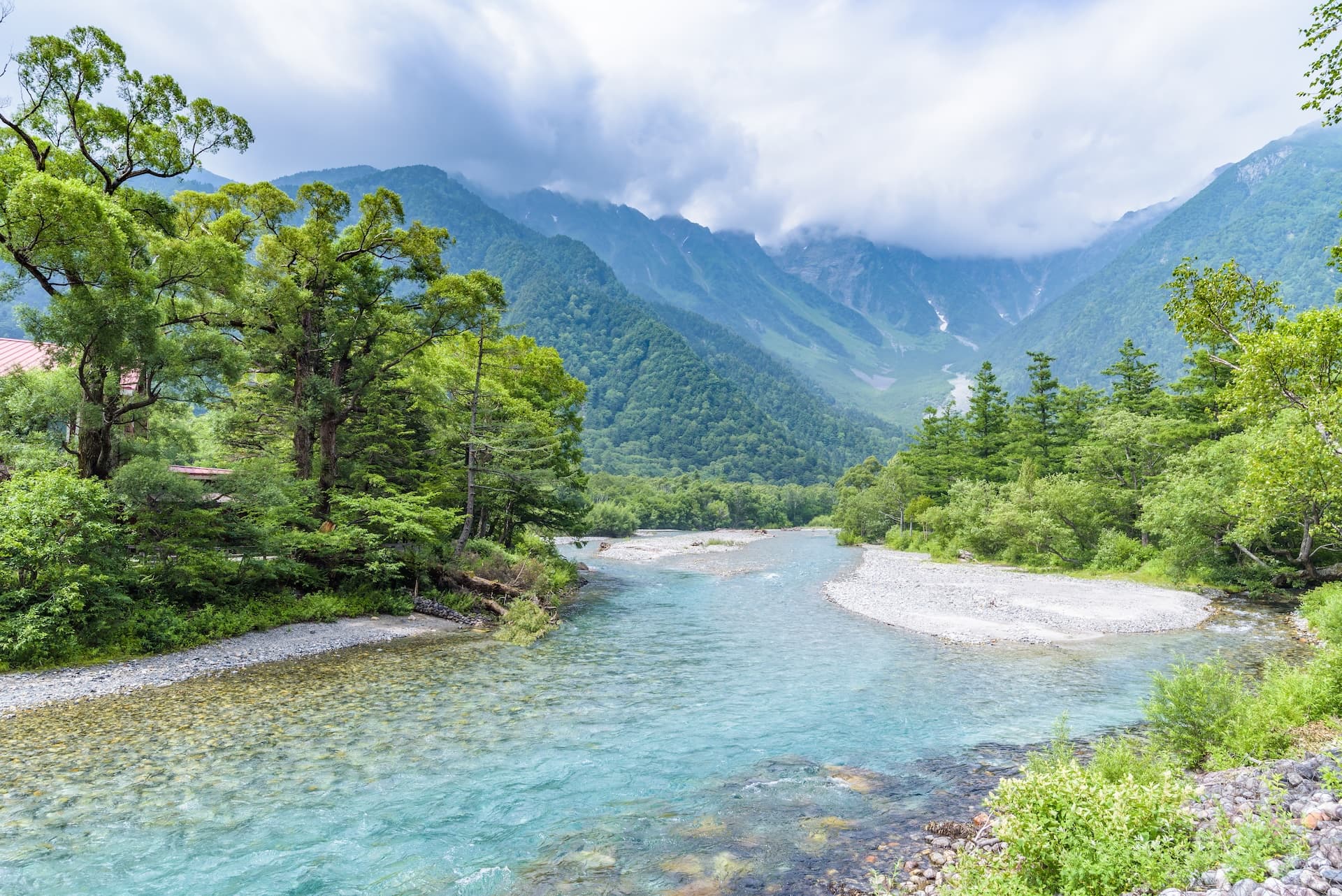
For travellers interested in the outdoors, the wider Alps open up opportunities for walking, mountain scenery and onsen. Kamikochi is particularly impressive during the warmer months, although access is seasonal and the area becomes busy at popular times.
As elsewhere in Chubu, trying to combine too many mountain destinations can create far more travelling than the itinerary initially appears to contain.
Beyond the familiar route
Some of Chubu's most interesting possibilities lie outside the places that appear on most first-time itineraries.
The Hokuriku coast, smaller towns in Toyama and Fukui, traditional craft communities and rural areas can provide a much more local experience of Japan. These places won't suit everybody, and that's precisely the point.
Someone particularly interested in craftsmanship, walking, food or rural life may gain far more from spending two nights somewhere less familiar than adding another famous destination simply because it appears on a standard route.
How Chubu fits into a journey
Chubu can fit particularly well between Tokyo and Kyoto, but the geography needs careful thought.
The Shinkansen makes travelling directly between the two cities extremely easy. Once you move into the Alps or towards the Sea of Japan, journeys become slower and may involve combinations of trains, buses and occasionally private transport.
That isn't necessarily a disadvantage. Some of the most enjoyable journeys through Japan are those where travelling through the landscape becomes part of the experience.
But there needs to be enough time.
Trying to combine Kanazawa, Takayama, Shirakawa-go, Matsumoto and the Kiso Valley in a few days can turn what should be one of the most interesting parts of a holiday into a succession of transfers.
Choosing two places well can be considerably better than trying to include five.
Should Chubu be part of your journey?
Chubu is particularly well suited to travellers who want a contrast to Japan's largest cities.
It can bring mountains, walking, traditional architecture, crafts, gardens, regional food and smaller communities into a journey without necessarily requiring a flight or a major diversion to another part of the country.
But there isn't a single Chubu itinerary that everybody should follow.
For some travellers, Kanazawa may be the obvious choice. For others, walking through the Kiso Valley, spending time in the mountains or discovering a smaller craft community will provide much more of what they came to Japan to experience.
The important thing isn't seeing central Japan. It's choosing the part of central Japan that gives your wider journey something it would otherwise be missing.
Gallery:


