
Travelling Solo in Japan: What to Know Before You Go
Japan is one of those countries where travelling alone can feel remarkably natural.
You won't be unusual eating by yourself. Nobody will think twice about seeing you sitting alone on a train. Hotels are accustomed to individual guests, public transport makes getting around relatively straightforward, and there is enough happening around you that being on your own rarely means feeling conspicuous.
For someone who enjoys independent travel, that combination can be enormously liberating.
But there is a difference between a country being easy to travel around alone and creating a good solo journey.
The practicalities may be straightforward, but travelling without a companion changes the experience in other ways. It affects accommodation costs, where and how you eat, what happens in the evenings and, perhaps most importantly, how much interaction you have with other people during the journey.
Those things are worth thinking about before you go.
Japan is unusually comfortable with people doing things alone
One of the pleasures of solo travel in Japan is how little explanation it requires.
Eating alone is completely normal. Many restaurants have counter seating, and some are almost designed around individual diners. Ramen shops, sushi counters, izakaya and casual restaurants can all work extremely well for somebody on their own.
The same is true elsewhere. Going to a museum, visiting a temple, sitting in a café or travelling across the country alone doesn't attract attention.
That makes a difference.
In some destinations, solo travellers can feel as though restaurants, hotels and activities have been designed primarily around couples or groups. Japan has plenty of places where the opposite is true.
You can spend an entire day exploring independently without ever feeling that you're somehow participating in something intended for somebody else.
Getting around independently is generally straightforward
Japan's public transport is one of the reasons solo travel works so well.
The Shinkansen makes travelling between major cities fast and comfortable, while urban railway and underground networks cover an enormous amount of ground. Once you've become familiar with the system, moving around Tokyo independently can feel considerably easier than the scale of the city initially suggests.
But the fact that transport is good doesn't mean every route through Japan is obvious.
The further you travel beyond the main cities, the more important the detail becomes. Rural trains may be infrequent, buses may require more planning and some journeys that look simple on a map involve awkward connections.
This is particularly relevant if you're travelling alone because there isn't somebody else beside you checking the platform, looking at the timetable or noticing that you're heading in the wrong direction.
A well-planned route removes much of that unnecessary uncertainty.
It also means you don't need to limit a solo journey to Tokyo, Kyoto and the easiest places to reach. With the right arrangements, smaller towns, rural areas, ryokan and less obvious parts of Japan can work extremely well.
Being alone doesn't mean everything needs to be independent
There is a temptation when planning a solo holiday to make the entire journey self-guided.
We don't think that necessarily produces the best experience.
A private guide can be particularly valuable at the beginning of time in a major city. Beyond explaining what you're seeing, a good guide can help you understand how the city works, introduce aspects of Japanese culture that are difficult to interpret independently and give you confidence to explore afterwards.
It also creates interaction.
That becomes more significant on a longer solo journey. If you're naturally happy in your own company, several days of independent sightseeing may be exactly what you want. But two or three weeks in which almost every meaningful interaction is with hotel reception staff can eventually feel rather different.
We therefore like to think about the social rhythm of a solo itinerary.
A guided day, a cultural experience, a walking tour or time with a local specialist can break up periods of completely independent travel without turning the holiday into an escorted tour.
The aim isn't to fill the itinerary with company.
It's to make sure the journey contains opportunities for human connection where they add something.
Accommodation works differently when you're travelling alone
Japan has an enormous range of accommodation for individual travellers, from simple business hotels to some of the country's best luxury properties.
The difficulty is often price rather than availability.
Hotel rooms are generally priced by room rather than simply halving the cost when one person stays, which means a solo traveller can pay considerably more per person than a couple sharing the same accommodation.
Ryokan can present another issue. Some traditional properties either don't accept single occupancy in particular rooms or charge a relatively high single rate because dinner and breakfast form an important part of the stay.
That doesn't mean solo travellers should avoid better hotels or ryokan.
It does mean we need to think more carefully about where spending the money adds something to the journey. A wonderful ryokan may still be absolutely worth including, while elsewhere a smaller, well-located hotel might make considerably more sense.
Location also becomes particularly important when travelling alone.
Being somewhere with restaurants, cafés and life around you can make evenings more enjoyable, whereas an excellent hotel in an isolated business district may feel rather different once you've returned from sightseeing.
Evenings deserve some thought
Days are generally easy to fill when you're travelling alone in Japan.
Evenings can be different.
For some people, sitting at a sushi counter, finding a small bar or wandering through Tokyo after dinner is one of the pleasures of travelling solo. For others, the point at which sightseeing ends and dinner begins is when they become most aware that they're travelling alone.
Neither response is unusual.
It's worth knowing which type of traveller you are.
Choosing accommodation in the right neighbourhood helps enormously. So does understanding that eating alone in Japan isn't something you need to apologise for or work around.
Counter seating can make dinner particularly enjoyable because you're watching the kitchen or chef rather than sitting alone at a table designed for four people. Smaller restaurants can also create more natural opportunities for interaction, although language inevitably affects how much conversation takes place.
There may also be evenings when returning to the hotel early is exactly what you want.
A solo itinerary doesn't need to manufacture entertainment simply because there's nobody else deciding what to do.
Safety is one of Japan's great advantages, but normal judgement still matters
Japan has a deserved reputation as a very safe country, and this is one of the reasons many people feel comfortable travelling there alone.
Being able to use public transport in the evening, walk through busy neighbourhoods and move between cities without constantly thinking about personal security can make solo travel considerably more relaxed.
But low crime doesn't mean no crime.
The normal precautions you would take elsewhere still apply. Keep an eye on belongings, be sensible when drinking, and be cautious if approached or encouraged into establishments in nightlife areas.
Women travelling alone may have some additional considerations, particularly on crowded trains and around nightlife districts, but Japan remains a destination where many women travel independently and feel very comfortable doing so.
The important thing is not to allow Japan's reputation for safety to turn into the assumption that nothing can ever go wrong.
Solo travel gives you one enormous advantage: freedom
There is a particular pleasure in travelling through Japan without having to negotiate the day with anybody else.
If you want to spend three hours in a museum, you can. If a temple doesn't interest you, you can leave. If you've discovered a neighbourhood you particularly like, there's nobody waiting for you to move on because something else was planned.
Japan rewards that freedom because there is so much detail to notice.
Some of the most enjoyable time can come from wandering without a particular objective, especially in Tokyo and Kyoto, where moving a few streets away from a famous area can reveal a completely different atmosphere.
The danger is going too far in the other direction and assuming that because you're travelling alone, you don't need much planning.
Freedom works best when the difficult parts have already been thought through.
Knowing that the hotel is in the right area, that the next journey makes sense and that the important arrangements are in place leaves you free to change the parts of the day that don't need to be fixed.
A solo journey doesn't need to be a lesser version of a couple's holiday
This is perhaps the most important point.
Solo travel is sometimes treated as though it's the same holiday somebody would have taken with a partner, minus the second person.
Japan gives you the opportunity to think about it differently.
Certain experiences can actually work better alone. Counter dining becomes easier. You can change plans without consultation. Guides can focus entirely on your interests. Moving through busy cities can be simpler when you're responsible only for yourself.
Other parts require more thought. Some accommodation costs more, certain ryokan are less straightforward for single occupancy, and a long journey needs enough interaction that it doesn't become isolating.
Those aren't reasons not to travel alone.
They're reasons to plan the journey as a solo journey from the beginning.
That might mean putting more thought into hotel locations, including occasional guided days, choosing experiences where interaction happens naturally and leaving enough independent time to enjoy the freedom that made you want to travel alone in the first place.
Japan doesn't merely make solo travel possible.
For the right traveller, being on your own can be one of the best ways to experience it.
Instant
10
Aug
Best Places to Visit in Japan: What Is Really Worth Seeing?
Japan has far too much to experience in one holiday. Discover how to decide which places genuinely deserve a place in your particular journey.
09
Aug
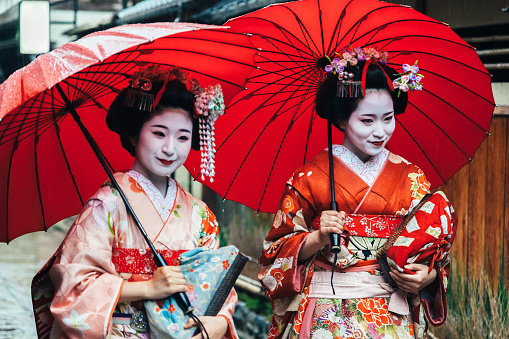
Geisha, Geiko and Maiko: What Visitors Should Know
Understand the differences between geisha, geiko and maiko, the traditions behind their profession and how visitors can experience this part of Japanese culture respectfully.