
The Biggest Mistakes People Make When Planning a Trip to Japan
Japan is an unusually forgiving country to visit.
The trains work extraordinarily well, hotels are generally reliable, public transport reaches places that would require a car in many other countries, and even when plans go slightly wrong, there's usually another way of getting where you need to go.
Yet it's surprisingly easy to plan a holiday that looks excellent on paper and doesn't work quite so well once you're there.
The mistakes are rarely dramatic.
More often, they're small decisions that gradually change the character of the holiday.
Trying to see too much is probably the one we encounter most often. Japan is a long way from the UK, and it's completely understandable to approach a first visit thinking that you may only ever go once. Tokyo leads to Kyoto, Kyoto leads to Osaka, then someone recommends Hiroshima, Kanazawa looks interesting, Mount Fuji surely has to be included and suddenly a two-week holiday contains six or seven different places.
Technically, it works.
Japan's transport network makes itineraries possible that would be exhausting in many other countries. But just because a route is possible doesn't necessarily mean it's enjoyable.
The problem isn't usually the time spent sitting on trains. It's everything around the journey. Packing, checking out, travelling to the station, navigating somewhere unfamiliar at the other end and checking in again all take a little time and energy. Do that every couple of days and the holiday can begin to feel as though you're continually arriving or leaving.
Another common mistake is treating every day as an opportunity that needs to be filled.
When you're planning from home, an empty afternoon can look like wasted time. Once you're in Japan, it can feel completely different.
It might become the afternoon you spend wandering through a neighbourhood you hadn't planned to visit, returning to somewhere you particularly enjoyed or simply stopping for lunch without wondering what time you need to leave for the next attraction. Japan is particularly good at rewarding curiosity, but curiosity needs time.
There's also a temptation to plan around famous sights rather than around the experience of visiting them.
Kyoto is a good example. It's perfectly possible to create a day that includes several of the city's most famous temples and shrines. Whether you'll enjoy seeing them all in succession is another question. After the third or fourth temple, places that deserve your attention can begin to merge into one another.
We'd usually rather choose fewer and understand why each one is worth visiting.
Timing matters too.
Fushimi Inari at a busy time of day is a very different experience from Fushimi Inari early in the morning. The same applies to some of Japan's best-known gardens, markets and historic districts. Occasionally, changing the order of a day makes a greater difference than changing the places you're visiting.
Accommodation creates another surprisingly easy trap.
A hotel can have excellent reviews, beautiful rooms and an attractive price and still be the wrong hotel for your holiday. Where you stay affects the beginning and end of every day, and saving a relatively small amount by staying somewhere inconvenient can mean spending considerably more time travelling backwards and forwards across a city.
Then there's the opposite mistake: assuming that spending more will automatically solve everything.
Japan has some extraordinary luxury hotels and ryokan, and for the right traveller they can be an important part of the experience. But the most expensive room isn't necessarily the best use of your budget. Sometimes the difference between a good holiday and an exceptional one comes from a private guide at the right moment, an unusual experience, a better location or simply an extra night somewhere you really want to explore.
Perhaps the easiest mistake of all, however, is planning someone else's holiday.
There's no shortage of Japan itineraries online. Some are excellent. The problem begins when a route designed around somebody else's interests gradually becomes the template for your own.
If you don't particularly enjoy shopping, you don't need to spend hours in Ginza because a guide tells you to. If contemporary art means little to you, an art island doesn't become essential simply because it's fashionable. Equally, if food, gardens, architecture, hiking, trains, ceramics, anime or Japanese whisky are the reasons you're excited about going, those interests should influence far more than one afternoon of the itinerary.
That's ultimately what most planning mistakes have in common.
They happen when the itinerary becomes more important than the people travelling on it.
A successful holiday doesn't need to include everything Japan has to offer. It needs to include the parts of Japan that matter to you, at a pace that gives you enough time to enjoy them.
The hardest part of planning Japan is often deciding what to leave out.
Getting that decision right can make all the difference.
10
Aug
Best Places to Visit in Japan: What Is Really Worth Seeing?
Japan has far too much to experience in one holiday. Discover how to decide which places genuinely deserve a place in your particular journey.
09
Aug
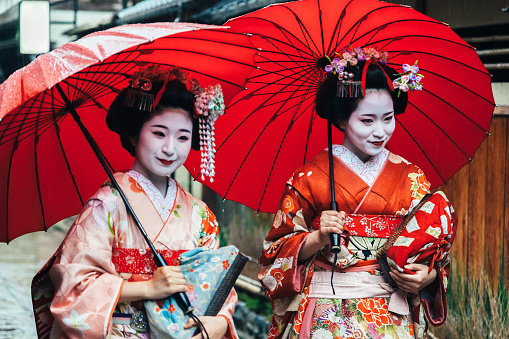
Geisha, Geiko and Maiko: What Visitors Should Know
Understand the differences between geisha, geiko and maiko, the traditions behind their profession and how visitors can experience this part of Japanese culture respectfully.