
Japanese Etiquette: What Visitors Really Need to Know
Before travelling to Japan, people sometimes worry about getting things wrong.
Should you bow? Where should you take your shoes off? Can you eat while walking? Is it rude to talk on a train? What happens if you don't know what to do at a shrine?
Japan has a reputation for having a complicated set of social rules, and there is certainly a great deal of etiquette woven into everyday life.
But visitors can relax.
Nobody expects you to arrive in Japan understanding every Japanese custom.
What matters far more is being observant, considerate and willing to follow what people around you are doing.
There are, however, a few things worth knowing before you arrive.
You don't need to learn how to bow properly
Bowing is part of everyday communication in Japan. You'll see it when people greet one another, say thank you, apologise and conduct business.
As a visitor, you don't need to worry about learning the different depths and degrees of formality.
A small, natural bow of the head is perfectly sufficient when thanking someone, and nobody will be offended if your technique isn't perfect.
In fact, one of the easiest mistakes is becoming so concerned about Japanese etiquette that perfectly ordinary interactions start to feel like a performance.
They shouldn't.
Be polite. Say thank you. Watch what other people do.
That will take you surprisingly far.
Shoes are one custom you do need to notice
There will be occasions when you're expected to remove your shoes.
Traditional ryokan are an obvious example, but you may also encounter this in temples, restaurants, private homes and other traditional buildings.
Usually it will be clear.
There may be a step at the entrance, a row of shoes already waiting, slippers provided for guests or a member of staff indicating what you should do.
The important thing is to notice the transition between the outside and inside space.
And then there are toilet slippers.
In some traditional accommodation you'll find a separate pair of slippers inside the lavatory. They're intended only for use there.
Forgetting to take them off afterwards is a surprisingly easy mistake to make.
Trains are quieter than you may expect
Japan's trains can be extremely busy without being particularly noisy.
People talk, of course, but generally at a lower volume than you might encounter on public transport in Britain. Phone calls are discouraged on most trains, and you'll often see passengers messaging rather than speaking on their mobiles.
On the Shinkansen, things are a little more relaxed. People eat, talk and enjoy the journey, although consideration for those around you still matters.
What tends to stand out isn't conversation itself.
It's loud conversation.
You don't need to sit in silence.
Just be aware of the people sharing the carriage with you.
Eating and drinking depends on where you are
You may have read that eating while walking is rude in Japan.
The reality is more nuanced.
Eating on long-distance trains is completely normal. So is enjoying food at festivals, markets and places where food is clearly intended to be eaten nearby.
What is less common is wandering through an ordinary street eating as you go.
If you buy something from a small food stall or shop, there may be an area nearby where you're expected to eat it. Watching what other customers do will usually give you the answer.
Again, you don't need a rulebook.
Context matters.
Don't tip
This is one of the easiest customs for British visitors to remember.
Tipping isn't generally part of Japanese culture.
You don't need to leave money for hotel staff, taxi drivers, guides or restaurant staff simply because you've received good service. Excellent service is normally provided without the expectation of an additional payment.
Trying to insist on a tip can create confusion rather than gratitude.
There are particular circumstances where a formal gratuity may be appropriate, but these are exceptions and use Japanese conventions of their own.
For ordinary travel, assume that the price you're given is the price you're expected to pay.
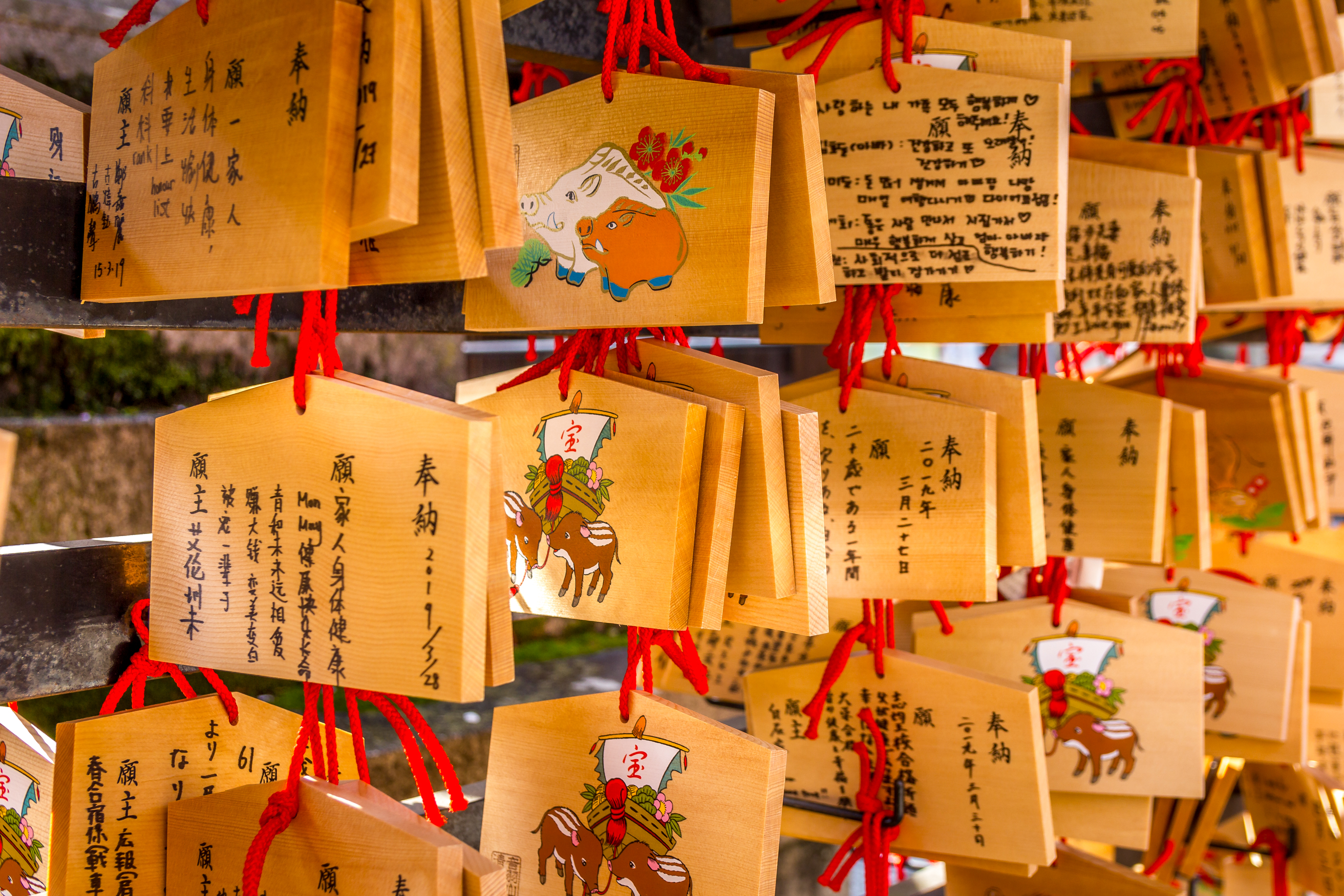
Temples and shrines aren't simply attractions
Japan's temples and shrines are some of the country's most rewarding places to visit, but it's worth remembering that many remain active places of worship.
You don't need to be Buddhist or Shinto to visit them, nor do you need to understand every ritual before entering.
You do need to behave with the same consideration you would show at an active place of worship elsewhere.
Photography may be prohibited in particular buildings or around sacred objects. Follow the signs rather than assuming that because photography is allowed outside, it's allowed everywhere.
You may also see visitors purifying themselves with water, making an offering, bowing or praying.
If you'd like to participate, learning the basic custom can add something to the experience.
If you would rather simply observe respectfully, that's perfectly acceptable too.
Be particularly thoughtful in residential areas
One consequence of Japan's popularity is that some places people visit are also places where people are trying to live their ordinary lives.
This is particularly apparent in parts of Kyoto.
A picturesque lane isn't necessarily a tourist attraction. It may lead to someone's home.
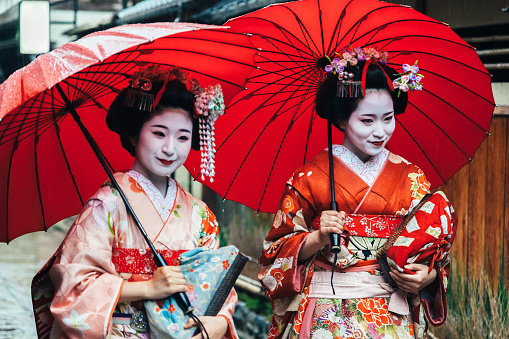
The same applies when encountering geiko and maiko in Kyoto's traditional entertainment districts. They are people going to work, not public exhibits. Following them, blocking their path or taking intrusive photographs isn't acceptable simply because seeing one feels like a special moment.
The principle extends well beyond Kyoto.
Respect private property, observe photography restrictions and remember that an interesting neighbourhood doesn't stop being a neighbourhood because visitors have discovered it.
Rubbish can be surprisingly complicated
One of the things first-time visitors often notice is how clean Japanese streets are despite the relative scarcity of public bins.
You may occasionally need to carry rubbish with you until you find somewhere appropriate to dispose of it.
Convenience stores and stations may have bins for particular types of waste, while vending machines often have recycling bins intended specifically for drinks containers.
Don't simply leave rubbish beside a full bin or put it into the wrong recycling container.
A small bag in your day bag can be unexpectedly useful.
Queuing matters
Japan is remarkably orderly when large numbers of people need to use the same space.
At railway stations you'll often see markings showing exactly where to wait for the train. People generally queue rather than gathering around the doors, then allow passengers to get off before boarding.
Escalator customs are less straightforward because which side people stand on has traditionally varied between regions, and campaigns increasingly encourage passengers to stand rather than walk on either side.
The easiest answer is not to memorise a regional rule.
Look at what is happening around you and don't block people unnecessarily.
Don't worry about being perfect
There are hundreds of other small customs you could learn before visiting Japan.
How to use chopsticks correctly. How business cards are exchanged. Where to place a wet towel in a restaurant. How to pour drinks for other people. Exactly how to wash before entering an onsen.
Some are useful. Others are unlikely to matter during an ordinary holiday.
You don't need to turn your trip into an examination in Japanese etiquette.
Japanese people know you're visiting from another country. A genuine mistake made while trying to behave respectfully is very different from ignoring a rule because it happens to be inconvenient.
Pay attention to signs.
Watch what people around you are doing.
Ask when you're unsure.
And remember that good manners in Japan begin with much the same principle as good manners anywhere else.
Consider the people around you.
Get that right and most of the rest follows naturally.
10
Aug
Best Places to Visit in Japan: What Is Really Worth Seeing?
Japan has far too much to experience in one holiday. Discover how to decide which places genuinely deserve a place in your particular journey.
09
Aug
Geisha, Geiko and Maiko: What Visitors Should Know
Understand the differences between geisha, geiko and maiko, the traditions behind their profession and how visitors can experience this part of Japanese culture respectfully.