
Japan with Children: How to Plan a Family Holiday
Japan can be an extraordinary place to visit as a family.
It's safe, public transport works exceptionally well and there is an almost endless variety of things for children to experience. One day might involve travelling on a bullet train, another exploring a castle, meeting deer in Nara, trying Japanese food or discovering the technology and pop culture of Tokyo.
But there's a difference between taking children to Japan and planning Japan for children.
And there's an even bigger difference between planning a holiday entirely around them and creating one that the whole family actually enjoys.
We think the best family holidays sit somewhere in between.
Start with your children, not a list of family attractions
A five-year-old, a twelve-year-old and a sixteen-year-old aren't going to experience Japan in the same way.
That sounds obvious, but family itineraries are often presented as though there's a universal collection of things children will enjoy.
There isn't.
A teenager interested in anime, gaming, fashion or Japanese food may be more excited about Tokyo than their parents. A younger child might be fascinated by trains, samurai or simply the novelty of sleeping on a futon. Another may have very little interest in conventional sightseeing but happily spend an afternoon learning a Japanese craft or exploring an interactive museum.
Start with what your children actually enjoy.
Then look at how Japan can bring those interests to life.
Don't make Japan a children's holiday
This may sound contradictory, but we think it's important.
Parents are going to Japan too.
You shouldn't have to abandon the gardens, food, architecture, history or culture that made you want to visit simply because you're travelling as a family.
The trick is balance.
A morning visiting somewhere culturally important might be followed by something much more active. A temple can work perfectly well if it isn't the fourth temple of the day. A museum adults particularly want to see may be much easier for everyone if the afternoon offers something the children have been looking forward to.
Children don't necessarily need constant entertainment.
They do need variety.
Japan is particularly good at providing it.
Tokyo can be brilliant for families
Tokyo initially looks like the part of the holiday that might be most difficult with children.
In reality, it can be one of the easiest.
The sheer variety means you can shape the city around almost any age or interest. Anime and manga, gaming, digital art, observation decks, character shops, unusual cafés, parks, museums and food can all sit alongside the more traditional side of the city.
The transport itself can become part of the excitement for younger children.
But Tokyo is enormous, and this is where family planning matters.
Trying to cross the city repeatedly because individual attractions looked close enough when you were planning from Britain can make the day unnecessarily tiring.
We'd rather concentrate on particular areas and allow enough time to enjoy them.
Kyoto needs a different approach
Kyoto is one of the places adults often most want their children to experience.
It's also somewhere children can quickly become tired of being shown things that adults find fascinating.
The answer isn't to leave Kyoto out.
It's to change how you experience it.
Instead of a succession of temples and shrines, mix cultural visits with activities that make Japan more tangible. Depending on the children's ages and interests, that might mean a tea ceremony, a hands-on cultural experience, cycling, food, a samurai-related activity or simply time exploring independently.
One carefully chosen temple that somebody helps bring to life can mean far more to a child than seeing five famous ones in succession.
Japan's culture becomes much more interesting when children can participate in it rather than simply look at it.
Experiences matter more than attractions
This is one of the biggest differences we've found when thinking about Japan for families.
Children often remember what they did more clearly than what they saw.
They may forget the name of a temple but remember learning how to use a calligraphy brush. They may not remember which neighbourhood they were in but remember making something, trying an unfamiliar food or travelling at nearly 200 miles per hour on the Shinkansen.
For some families, the standout experience might be a cooking activity.
For another, it could be cycling, contemporary digital art, seeing sumo, exploring a castle or spending time somewhere outdoors.
This is where understanding the individual family becomes much more useful than compiling a list of Japan's supposedly best family attractions.
Japan doesn't need to mean theme parks
Japan has some of the world's best-known theme parks, and for families who love them they can absolutely deserve a place in the holiday.
But they aren't compulsory.
There's sometimes an assumption that taking children to Japan means building the trip around Disney, Universal Studios or other large attractions.
For some families, that will be exactly right.
Others may find that their children are far more excited by Japan itself.
The trains, vending machines, convenience stores, capsule toys, unusual snacks, arcades and completely unfamiliar streets can be surprisingly entertaining without anybody having designed them as a children's attraction.
One of the pleasures of family travel is seeing what children notice that adults don't.
Japan gives them plenty to work with.
Think carefully about accommodation
Family accommodation in Japan deserves more attention than simply finding a room with enough beds.
Hotel rooms can be smaller than British families expect, particularly in Tokyo, and rooms genuinely suitable for four people aren't available everywhere.
Connecting rooms can sometimes be a better solution, particularly with older children.
Traditional accommodation introduces other possibilities.
A Japanese-style room with futons can work extremely well for a family, while a ryokan stay can give children an experience completely different from a conventional hotel. But formal multi-course dinners, communal bathing and Japanese breakfasts won't suit every child.
Again, the question isn't whether a ryokan is family-friendly.
It's whether the particular ryokan suits your family.
Food may be easier than you expect
Parents sometimes worry about what their children will eat in Japan.
For many families, it turns out to be one of the easier parts of the holiday.
Japanese food goes far beyond sushi.
Ramen, udon noodles, yakitori, gyoza, rice dishes, tempura and tonkatsu provide plenty of approachable options, while bakeries, department-store food halls and convenience stores make it relatively easy to find something simple when needed.
Some children become much more adventurous once they're there.
Others don't.
There is little benefit in turning every meal into a cultural challenge.
Let them try things, but have easy options available too.
If a child has allergies, coeliac disease or another medical dietary requirement, that's different and needs to be considered properly before travelling.
Give teenagers some ownership
Japan can be particularly rewarding with teenagers because many already have their own reasons for wanting to go.
They may follow Japanese fashion, listen to Japanese music, watch anime, play Japanese games, be interested in photography or know far more about a particular aspect of contemporary Japan than their parents do.
Use that.
Give them some ownership of the holiday.
Let them choose an area they want to explore, something they want to eat or an experience they particularly want included.
A family holiday works rather better when everybody feels that part of it belongs to them.
Build in independence where appropriate
With older children and teenagers, Japan can also offer opportunities for a little independence.
Depending on their age, confidence and the family, that might simply mean allowing them to browse a shop while their parents have coffee nearby. For older teenagers it could mean exploring part of a neighbourhood independently before meeting again.
Japan's excellent transport and general sense of order can make this feel more manageable than it would in many unfamiliar countries.
Obviously, parents need to make decisions appropriate to their own children.
But family travel doesn't always require everybody to do everything together.
Sometimes an hour apart makes the next few hours together considerably more enjoyable.
Remember that children get tired
Japan is exciting.
It's also stimulating.
Busy stations, unfamiliar food, different beds, crowds, heat and simply being somewhere completely new can take more out of children than parents expect.
Jet lag can amplify all of it during the first few days.
A child who has happily explored Tokyo all morning may simply have had enough by mid-afternoon.
That's not a planning failure.
It's family travel.
The itinerary needs enough flexibility to respond.
This is particularly important in the Japanese summer, when heat and humidity can make sightseeing considerably more tiring for both children and adults.
The climate needs to be part of the planning, not something considered once you arrive.
The best family itinerary isn't necessarily the busiest
There's a temptation to think that keeping children occupied means keeping the holiday full.
We don't think it does.
The most successful family journeys usually have enough structure to make each destination interesting, but enough flexibility to change plans when somebody is tired, fascinated by something unexpected or simply wants an afternoon without another scheduled activity.
And that's perhaps the most important point.
A family holiday to Japan shouldn't feel like an educational tour designed by the parents.
Nor should it feel like two weeks of children's entertainment that the adults happen to accompany.
At its best, it's a shared experience of discovering somewhere completely different.
The children will remember different things from you.
That's part of what makes taking them so worthwhile.
10
Aug
Best Places to Visit in Japan: What Is Really Worth Seeing?
Japan has far too much to experience in one holiday. Discover how to decide which places genuinely deserve a place in your particular journey.
09
Aug
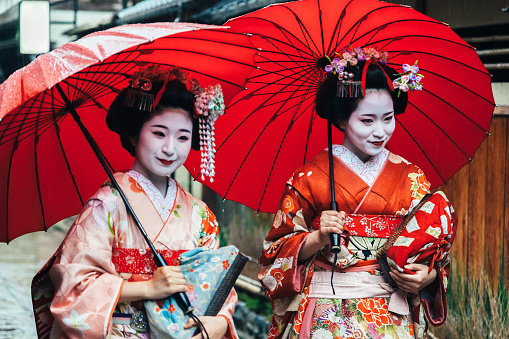
Geisha, Geiko and Maiko: What Visitors Should Know
Understand the differences between geisha, geiko and maiko, the traditions behind their profession and how visitors can experience this part of Japanese culture respectfully.