
Japan Itinerary for First-Time Visitors: Choosing the Right Route
One of the biggest misconceptions about planning a holiday to Japan is that the route almost creates itself.
Tokyo, Kyoto, Osaka, Mount Fuji, Hiroshima. They're the places that appear most often in guidebooks, on social media and in suggested itineraries, so it's easy to assume that the challenge is simply deciding how to fit them all into the time you have available.
In our experience, that's rarely where the real challenge lies.
Most destinations in Japan deserve their reputation. The more difficult question is whether they deserve a place in youritinerary.
That might seem like an unusual distinction, but it's an important one.
A holiday isn't a collection of individual destinations. It's a sequence of experiences. Each place influences how you feel about the next, and a route that looks perfectly sensible on a map doesn't always feel quite so balanced once you're travelling through it.
Think about the first time you arrive in Tokyo.
For many visitors, it's everything they expected and nothing they imagined. The scale of the city, the efficiency of its transport system and the sheer variety of neighbourhoods create an immediate impression of modern Japan. Arriving in Kyoto a few days later often feels so different that it's difficult to believe you're still in the same country. That contrast is one of the reasons the two cities work so well together. Each helps you understand the other.
The same principle applies throughout an itinerary.
A few days in the mountains often feel more rewarding after time in Japan's largest cities. A traditional ryokan can provide a welcome change of pace after several nights in modern hotels. Even something as simple as spending a quieter day between two busier ones can completely change the rhythm of a holiday.
That's why we tend to think less about individual destinations and more about how they relate to one another.
It's also why we encourage people to be cautious about adding places simply because they're nearby or well known.
Japan's transport network is exceptionally good and travelling between destinations is usually straightforward. Looking at a map, it's easy to think that another stop won't make much difference. After all, the train journey may only take a couple of hours.
In reality, travelling is never just the train journey.
Packing, checking out, getting to the station, finding your next hotel and settling in again all take time. None of those things is particularly difficult, but together they can quietly change the pace of a holiday. One extra destination may not sound like much when you're planning at home, yet once you're travelling it can become the difference between feeling relaxed and feeling that you're constantly moving on.
For that reason, we often find ourselves recommending fewer destinations than people initially expect.
Not because there isn't more to see.
Quite the opposite.
Japan rewards time.
It rewards returning to a neighbourhood in the evening after seeing it during the day. It rewards wandering away from the main street simply because something catches your eye. It rewards the freedom to spend another hour somewhere without worrying about catching the next train.
Those moments rarely appear in a guidebook, yet they often become the memories people talk about long after they've returned home.
For many first-time visitors, Tokyo and Kyoto provide an excellent foundation because together they introduce two very different perspectives on Japan. From there, the route begins to reflect your interests rather than a standard formula. Some people are drawn towards the Japanese Alps, others towards Hiroshima, Kyushu or the Seto Inland Sea. Some discover that a traditional ryokan becomes the highlight of the trip, while others find themselves talking most enthusiastically about a small town they had never even heard of before they arrived.
There isn't a single route that's right for everyone.
There probably shouldn't be.
The best itineraries are rarely the ones that include the greatest number of famous places. They're the ones where every destination has a reason for being there and contributes something different to the holiday as a whole.
When that happens, the route begins to feel less like a series of train journeys and more like a story, with each chapter naturally leading to the next.
10
Aug
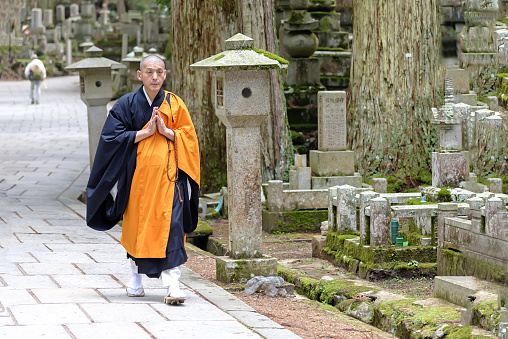
Best Places to Visit in Japan: What Is Really Worth Seeing?
Japan has far too much to experience in one holiday. Discover how to decide which places genuinely deserve a place in your particular journey.
09
Aug
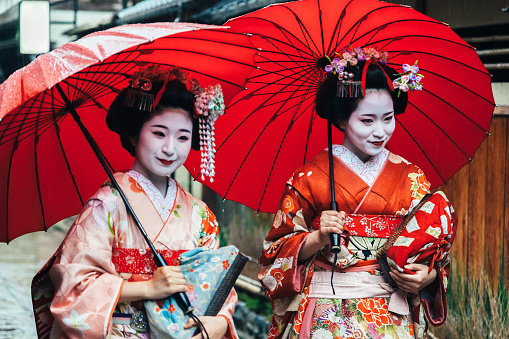
Geisha, Geiko and Maiko: What Visitors Should Know
Understand the differences between geisha, geiko and maiko, the traditions behind their profession and how visitors can experience this part of Japanese culture respectfully.