
How Much Should You Plan Each Day in Japan?
Once you've decided where you're going in Japan, another question quickly follows.
How much should you actually plan each day?
It's tempting to organise a holiday around a succession of things to see. A temple at nine, a market before lunch, a museum in the afternoon and an observation deck before dinner.
Some days may work perfectly well like that.
But we think the better starting point is to decide what you want from the day.
Tokyo is a good example.
Rather than treating Shibuya, Asakusa, Shinjuku and Harajuku as individual attractions to collect, it makes more sense to think of them as neighbourhoods. Each has its own character and each rewards some time to explore beyond the obvious sights.
A day might therefore combine two areas that make sense together, with one or two things you particularly want to see and enough time to discover what lies between them.
Kyoto needs a slightly different approach.
Here, geography matters. Rather than crossing the city repeatedly to visit a collection of famous temples, it can be much more rewarding to concentrate on one area and understand it properly. A temple or garden can then become part of exploring that part of Kyoto rather than simply the next stop on a schedule.
The same principle becomes even more useful once you travel beyond the major cities.
A day might revolve around cycling beside a lake, walking part of the historic Nakasendo, visiting a workshop, exploring a market or simply spending time in a small town. There may be fewer recognisable attractions, but that doesn't make the day any less worthwhile.
Decide which days deserve structure
Not every day of a holiday needs the same amount of planning.
There will probably be some experiences that need a fixed time. A private guide, tea ceremony, museum reservation or particular cultural experience naturally gives the day some structure.
Rather than filling the remaining hours simply because they're available, we prefer to build the rest of the day around that anchor.
If you're meeting a guide in the morning, for example, the afternoon might be left largely independent. If you have an important evening experience, there may be little benefit in creating an exhausting day beforehand.
This creates a much more natural rhythm than treating every available hour as something that needs to be allocated.
Use guides selectively
A good guide can add enormously to the right day.
For a first visit, we particularly value guiding when it helps you understand somewhere rather than simply showing you around it.
Tokyo can initially seem overwhelming. Spending time with someone who can explain how the city works, introduce its neighbourhoods and provide some cultural context can give you confidence to explore independently afterwards.
Kyoto benefits from knowledge for different reasons. Understanding what you're looking at can transform a temple, garden or historic district from somewhere attractive into somewhere meaningful.
But we wouldn't guide every day.
There is real value in having somebody knowledgeable with you when they add something to the experience. There is equally real value in being able to turn left because a street looks interesting without having to wonder what comes next.
A good itinerary makes room for both.
Choose your early mornings
There are occasions in Japan when getting up early is absolutely worth it.
Some of Kyoto's best-known places can feel completely different before the main visitor numbers arrive. Markets, gardens and other popular places can also reward careful timing.
But that doesn't mean every morning should start early.
Choose the occasions when timing will materially improve the experience. On another day, have a slower breakfast and start later.
The objective isn't to beat everybody else to Japan.
It's to use your time intelligently.
Think about energy as well as time
Two days containing the same number of activities can feel completely different.
A museum, leisurely lunch and evening food tour may be quite manageable. A day involving several temples, extensive walking, crowded transport and an evening experience may be considerably more tiring.
That's why we wouldn't judge a day simply by the number of things written on the itinerary.
Think about the energy it requires.
This becomes particularly important when travelling with children, different generations or anyone with mobility considerations. But it applies to everybody. Even very active travellers don't necessarily want every day of their holiday to test their stamina.
There should be changes of gear.
A busy city day can be followed by something quieter. A guided day can be followed by independent exploration. A morning that starts early can lead into an afternoon with very little structure.
That variation helps a longer holiday continue to feel enjoyable.
Leave some decisions until you're there
You don't need to decide everything before leaving Britain.
Weather alone is a good reason to retain some flexibility. A clear morning may be the perfect opportunity for a viewpoint or garden. A wet afternoon might be better spent exploring a museum, shopping or simply lingering over lunch.
Then there are the things you don't know about yet.
You may hear about an exhibition after you arrive. A guide might suggest somewhere that appeals to you. You may simply discover that you particularly like an area and want to return.
Having some unallocated time allows you to respond to Japan rather than simply follow the plan you made months earlier.
That's an important distinction.
A good itinerary should give your holiday structure.
It shouldn't control it.
So how much should you plan each day in Japan?
Enough that the things which matter are properly thought through and the day has a sense of purpose.
Then leave enough room for Japan to contribute some ideas of its own.
10
Aug
Best Places to Visit in Japan: What Is Really Worth Seeing?
Japan has far too much to experience in one holiday. Discover how to decide which places genuinely deserve a place in your particular journey.
09
Aug
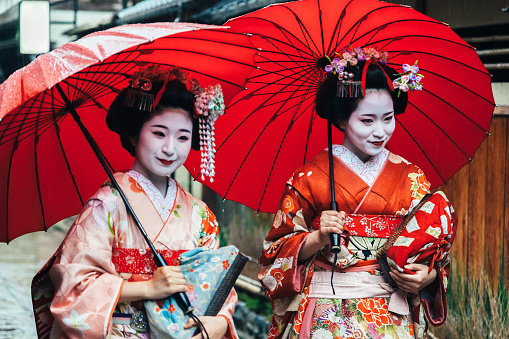
Geisha, Geiko and Maiko: What Visitors Should Know
Understand the differences between geisha, geiko and maiko, the traditions behind their profession and how visitors can experience this part of Japanese culture respectfully.