
How Long Should You Spend in Japan?
One of the biggest misconceptions about planning a holiday to Japan is that the answer depends on the number of days you have available.
We don't think it does.
We've helped people create unforgettable holidays in ten days, and we've seen three-week itineraries that left people feeling exhausted. The difference wasn't the amount of time they had. It was how they chose to spend it.
Japan has a habit of making people ambitious.
You open a map and quickly realise just how much there is to see. Tokyo, Kyoto, Osaka, Hiroshima, Mount Fuji, Kanazawa, Takayama, Miyajima, Nara... it doesn't take long before an itinerary begins to stretch from one end of the country to the other.
On paper, it often looks perfectly reasonable.
Japan's trains are fast, reliable and remarkably comfortable. Travelling between cities is generally straightforward, which makes it easy to think that adding one more destination won't make much difference.
Sometimes it doesn't.
Quite often, it does.
Every time you move on, you're not simply taking a train. You're packing your suitcase, checking out of your hotel, making your way to the station, finding your next hotel and getting your bearings in a new place. None of those things takes very long on its own, but together they quietly consume hours that could otherwise have been spent enjoying Japan.
That's why we rarely begin by asking how many places someone wants to visit.
Instead, we ask a different question.
How do you want your holiday to feel?
Some people enjoy the excitement of moving regularly and waking up somewhere new every few days. Others prefer to unpack, settle in and explore a place properly before moving on. Neither approach is better than the other.
The important thing is recognising that they create two very different holidays.
One of the easiest traps to fall into is believing that seeing more of Japan automatically means experiencing more of it.
In our experience, the opposite is often true.
The holidays people remember most rarely revolve around the number of destinations they visited. They remember watching Kyoto wake up before the crowds arrived, discovering a restaurant they would never have found in a guidebook, or deciding to spend another hour somewhere simply because they didn't need to rush for the next train.
Those moments rarely happen by accident.
They happen because an itinerary allows them to.
So, how long should you spend in Japan?
If this is your first visit, we'd usually suggest allowing enough time to experience the country's contrasts without feeling as though you're constantly moving on. For many people, that means around two weeks, but it's certainly not a rule.
A week can be enormously rewarding if expectations are realistic and the route is carefully planned. Three weeks gives you the freedom to travel at a gentler pace and discover places that simply don't fit into a shorter holiday. Longer still, and Japan begins to reveal another side of itself, one that few first-time visitors ever experience.
The number of days isn't really the point.
The important thing is making sure the time you have matches the holiday you're hoping to create.
Because a memorable trip to Japan isn't measured by how many places you managed to fit in.
It's measured by how much you enjoyed the places that truly deserved to be there.
10
Aug
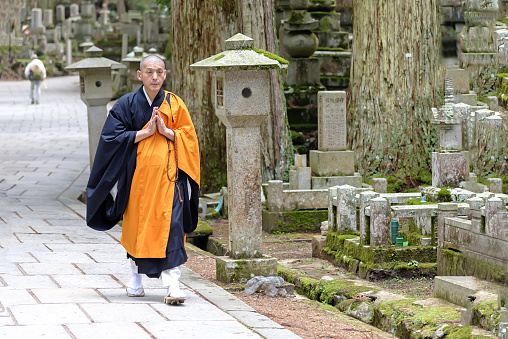
Best Places to Visit in Japan: What Is Really Worth Seeing?
Japan has far too much to experience in one holiday. Discover how to decide which places genuinely deserve a place in your particular journey.
09
Aug
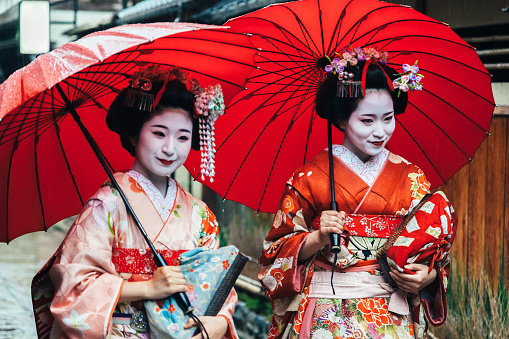
Geisha, Geiko and Maiko: What Visitors Should Know
Understand the differences between geisha, geiko and maiko, the traditions behind their profession and how visitors can experience this part of Japanese culture respectfully.