
Do You Need a Japan Travel Specialist?
Japan is remarkably easy to travel around.
Its trains are excellent, its cities are generally safe and well organised, and there is more information available to travellers than ever before. Hotels can be researched online, train times can be checked in seconds and almost every famous attraction has been photographed, reviewed and discussed thousands of times.
The difficulty isn't finding information.
It's knowing what to do with it.
Search for the best area to stay in Tokyo and you'll find convincing arguments for Shinjuku, Ginza, Asakusa, Shibuya, Marunouchi and several others. Research where to go between Tokyo and Kyoto and you might discover Hakone, Kawaguchiko, Kanazawa, Takayama, the Kiso Valley or somewhere you hadn't previously considered at all.
None of those suggestions is necessarily wrong.
The challenge is deciding which is right for you.
That's where experienced travel planning begins to have value.
A good Japan specialist shouldn't simply book things that you could have booked yourself. If all they're doing is reserving hotels, buying train tickets and adding experiences to a standard itinerary, it's reasonable to question what you're paying them for.
The value should come from the decisions behind those bookings.
Sometimes that means introducing a place you hadn't considered. Sometimes it means knowing that a beautiful ryokan is worth making a detour for, while another, however impressive it looks online, doesn't justify disrupting the route. Quite often it means recommending that you leave something out.
That last point is more important than it might sound.
When people first begin planning Japan, the natural tendency is to add. They discover another town, temple, restaurant or experience and try to find somewhere to fit it in. A specialist should be able to look at the holiday as a whole and recognise when adding something will improve it and when it will simply make it busier.
Experience also matters when seemingly small decisions begin to interact.
A hotel isn't simply a room. Its location affects how each day works. A ryokan isn't simply an alternative type of accommodation. Dinner and breakfast may be part of the stay, arrival times matter and the experience can work brilliantly at one point in an itinerary and awkwardly at another. A train journey that appears straightforward on a map may involve several changes while a slightly different route could make the day considerably easier.
Individually, none of these decisions is particularly complicated.
Across a two or three-week holiday, there can be hundreds of them.
The value of specialist planning becomes greater still when the journey moves beyond the obvious.
Tokyo and Kyoto are exceptionally well documented. The same isn't always true when you begin exploring smaller towns, rural regions or places where relatively few international visitors stay. Information in English can become more limited, transport connections less frequent and some of the most interesting accommodation considerably harder to assess from photographs and online reviews alone.
This is where local knowledge becomes particularly important.
It's also where having a team on the ground in Japan makes a real difference. Most holidays run exactly as planned, but travel occasionally has other ideas. A train can be disrupted, bad weather can affect a journey, an experience may need to change or you may simply need help with something you hadn't anticipated before you left home.
When that happens, being able to contact someone who knows your itinerary and can speak directly with hotels, guides and local suppliers is very different from being left with a collection of booking confirmations and telephone numbers. Problems can often be dealt with while you're getting on with your holiday, rather than becoming something you have to spend valuable time trying to resolve yourself.
We think that support is an important part of a genuinely bespoke journey. The planning shouldn't finish when you arrive in Japan. There should still be someone there when you need them.
There are times when that support matters more than others.
Travelling during cherry blossom or the autumn colours makes availability particularly important. Families may need a route that works for different ages rather than simply a collection of child-friendly attractions. Dietary requirements can require careful communication. Travellers with limited mobility need to understand the reality of distances, stations, hotel layouts and individual experiences rather than relying on a description that says somewhere is "accessible".
And sometimes the requirement is much simpler.
You may simply want somebody who understands Japan to listen properly.
One of the most important parts of planning a bespoke holiday happens before an itinerary exists. It's understanding why someone wants to visit Japan in the first place.
For one person, food may be central to the journey. Someone else may have spent years dreaming of Japanese gardens, architecture or traditional inns. A family might want their children to experience a culture very different from their own without spending two weeks being marched around temples. Another traveller may care far more about walking, contemporary art, ceramics, anime or meeting people than seeing Japan's most famous sights.
Those differences should change the itinerary.
If they don't, it isn't really bespoke.
This is also why we don't believe the role of a specialist is to make every decision for you. The best planning is a conversation. Our job is to understand what matters to you, use our knowledge and that of our team in Japan to explore the possibilities, and explain the reasoning behind the recommendations we make.
Occasionally, that means challenging an idea.
If we think somewhere isn't worth the additional journey, we'll say so. If spending more on a particular hotel is unlikely to improve your holiday, we'd rather put the budget somewhere it will. Equally, if we believe an experience or an unusual destination could become one of the highlights of the journey, we'll explain why we think it deserves to be there.
Ultimately, that's where we believe a Japan travel specialist should add value.
Not by making Japan seem difficult.
Not by booking things simply because they can.
But by bringing together knowledge, judgement and support to create a journey that works as a whole, and then being there to support you while you experience it.
Because information about Japan has never been easier to find.
Knowing which information actually matters to your holiday, and having knowledgeable people to turn to once you're there, is something rather different.
10
Aug
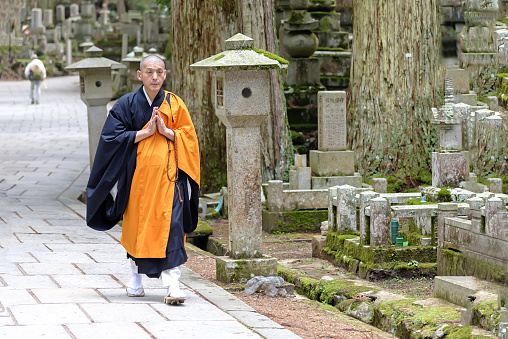
Best Places to Visit in Japan: What Is Really Worth Seeing?
Japan has far too much to experience in one holiday. Discover how to decide which places genuinely deserve a place in your particular journey.
09
Aug
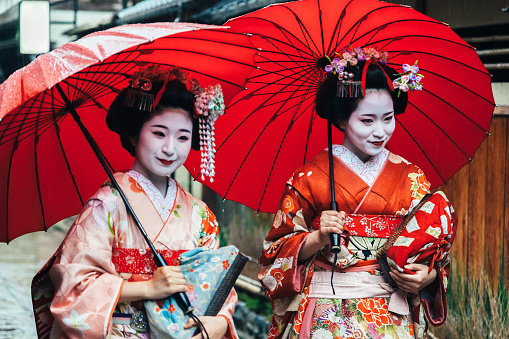
Geisha, Geiko and Maiko: What Visitors Should Know
Understand the differences between geisha, geiko and maiko, the traditions behind their profession and how visitors can experience this part of Japanese culture respectfully.