
Accessible Travel in Japan: What You Need to Know
Japan can be an excellent country to visit if you have limited mobility.
Its major cities have extensive public transport, many stations have lifts and accessible facilities, and staff are generally extremely helpful when assistance is required. Modern hotels, museums, shopping centres and many major visitor attractions have also been designed or adapted with accessibility in mind.
But that isn't the whole story.
Japan is a country where exceptionally modern infrastructure sits alongside historic temples, traditional inns, mountain villages and buildings that were never designed for people using wheelchairs or with difficulty walking.
A journey can therefore be very accessible in one place and considerably more challenging in the next.
That doesn't necessarily mean leaving the more difficult places out.
It means understanding what the individual traveller needs and planning the journey accordingly.
Limited mobility means different things to different people
This is the most important place to start.
Someone who can comfortably walk for 20 minutes but struggles with stairs has very different requirements from somebody using a wheelchair.
Another traveller may be able to walk reasonable distances but need regular opportunities to sit down. Someone else may be perfectly comfortable once they reach an attraction but find large railway stations exhausting.
Age doesn't necessarily tell us very much either.
We've encountered travellers in their seventies who happily walk all day and considerably younger people for whom the same itinerary would be completely unsuitable.
So simply describing a holiday as "accessible" isn't particularly useful.
The questions need to be more specific.
How far are you comfortable walking? Are stairs difficult? Can you get in and out of an ordinary taxi? Do you use a wheelchair all the time or only for longer distances? Can you sleep on a futon? Would getting down to floor level be difficult?
Those answers can change the itinerary.
Japan can involve more walking than people expect
This catches people out.
Japan has superb public transport, but using public transport doesn't necessarily mean walking very little.
A large railway station can involve considerable distances between the entrance, platform and connecting line. Underground stations may have several entrances and exits. Visiting a temple can involve walking from the nearest station before you've even reached the grounds.
Tokyo itself is enormous.
A day that looks relatively undemanding on an itinerary can quietly accumulate a significant amount of walking simply through stations, neighbourhoods and attractions.
Kyoto introduces different challenges. Some of its most interesting historic areas are best experienced on foot, while temple and shrine grounds can include gravel, steps, slopes and uneven surfaces.
This is why we think about the whole day, rather than simply asking whether an individual attraction is accessible.
A museum with excellent wheelchair access doesn't make the day accessible if reaching it requires an exhausting journey.
The railway system can work extremely well
Japan's major railway network is generally very accessible. Many stations have lifts and accessible toilets, while staff can assist wheelchair users when boarding and leaving trains, using portable ramps where necessary.
The Shinkansen can work particularly well, with accessible seating, wheelchair spaces and boarding assistance available. However, the dimensions of the wheelchair matter. JR Central generally permits wheelchairs up to 70 cm wide and 120 cm in length and height. Standard Shinkansen doors can be surprisingly narrow — around 71 cm on some trains — although designated accessible carriages have wider entrances.
For anyone using a larger manual or powered wheelchair, we would therefore establish the dimensions and requirements in advance rather than simply assuming that an accessible train will accommodate any wheelchair.
The individual journey matters too. A major station and Shinkansen journey may be relatively straightforward, while a smaller rural station later in the itinerary could present quite different challenges.
That's why we look not only at whether a destination is accessible, but at the complete journey required to reach it.
Sometimes the best answer isn't public transport
Japan's public transport is so good that it's tempting to assume it should always be used.
For someone with limited mobility, that may not be the best approach.
A taxi can remove a long walk between a station and hotel. A private transfer might avoid several railway changes with luggage. In a rural area, arranging a vehicle for part of the day could make somewhere practical that would otherwise be unnecessarily difficult.
That doesn't mean creating an entire journey around private cars.
Tokyo's railway system, for example, may still be considerably more efficient than travelling everywhere by road.
The better approach is usually a combination.
Use Japan's excellent public transport where it works well for the traveller, and use taxis or private transport where they materially improve the day.
Choosing the right hotel matters
Hotel accessibility is about much more than whether there's a lift.
Room size matters, particularly for someone using a wheelchair. So does the bathroom layout, the height of the bed and the amount of space around it.
Location can be equally important.
A very good accessible room loses some of its advantage if the hotel is a difficult journey from the places you want to visit. Conversely, a well-located hotel can reduce the amount of walking required every single day.
This is one of the occasions when we'd often prioritise practical suitability over choosing a hotel simply because it looks more impressive.
There is little benefit in having the better hotel if getting back to it every evening becomes an ordeal.
Traditional accommodation needs particular thought
A ryokan can be one of the most memorable experiences of a holiday in Japan.
It can also present some obvious accessibility difficulties.
Older buildings may have steps, narrow corridors or limited lift access. Traditional rooms may involve sitting at floor level, while sleeping on a futon requires getting down onto the tatami and back up again.
Then there are the baths.
An onsen may involve steps, slippery surfaces and low washing stools. Some baths have handrails or other adaptations; others don't.
None of this automatically rules out staying in a ryokan.
There are properties with Western-style beds, accessible rooms, private baths and layouts that work considerably better for travellers with limited mobility.
The important thing is choosing the right ryokan rather than assuming that traditional accommodation either will or won't work.
Sometimes a small adjustment makes the experience possible.
Sometimes a different property is the better answer.
Temples and historic Japan can be more complicated
This is perhaps where expectations need the most careful management.
Japan's historic buildings weren't constructed according to modern accessibility standards.
Temple grounds may contain stone steps, gravel paths, steep approaches and raised thresholds. Gardens can have stepping stones and uneven surfaces. Castles frequently involve steep staircases, and some historic districts are naturally easier to explore than others.
But appearances can also be deceptive.
A famous flight of steps doesn't necessarily mean there isn't another accessible route. Some major historic sites have lifts, ramps or alternative entrances that aren't immediately obvious to a visitor arriving for the first time.
So the answer isn't simply to remove historic Japan from an itinerary for somebody with limited mobility.
It's to establish what is realistically possible and decide whether the experience justifies the effort required.
Guides can make a real difference
A good private guide can be particularly valuable when mobility needs affect the way a day works.
The benefit isn't simply having someone explain what you're seeing.
A guide can adjust the pace, change the route, use a taxi where appropriate and respond if somebody becomes tired earlier than expected.
That flexibility matters.
An itinerary might suggest that three places are possible during the day. A good guide should recognise when enjoying two properly is a much better idea.
There is no virtue in completing everything on the schedule if the traveller is exhausted by the end of it.
Don't confuse accessible with effortless
This distinction is important.
Something can technically be wheelchair accessible while still being tiring or awkward.
A station may have a lift, but reaching it could involve taking a different route through the building. A temple may have an accessible entrance but still cover a large area. A hotel might have an adapted bedroom but be located on a steep street.
Equally, somewhere that initially appears difficult may work perfectly well with the right arrangements.
That's why individual research matters more than labels.
We'd rather understand the reality of a particular journey than simply be told somewhere is "barrier-free".
Pace becomes part of the itinerary
For travellers with limited mobility, one of the easiest mistakes is simply taking a conventional Japan itinerary and removing a few activities.
That doesn't necessarily solve the problem.
The pace itself may need to change.
Perhaps you stay an additional night in Kyoto so that the city can be explored over three easier days rather than two demanding ones. A morning with a guide might be followed by an unstructured afternoon, or the hotel could be chosen partly because there are restaurants and interesting places nearby, allowing an evening to be enjoyed without another substantial journey.
These aren't compromises. They're decisions that make the holiday work better for the person actually taking it and, in truth, some of them would improve plenty of itineraries for travellers without mobility difficulties too.
Tell us what is difficult, not simply that mobility is limited
If we're planning a journey for somebody with mobility requirements, the more specific the information we have, the better.
You don't need to fit yourself into a category.
Tell us what you can comfortably do and what causes difficulty.
If you can manage stairs slowly but dislike long distances, say so. If you normally walk but sometimes use a wheelchair, that's important. If getting into a bath is difficult, or you need a walk-in shower, or getting up from a futon would be impossible, those details matter.
We can then work with our team in Japan to consider the route, accommodation, transport and experiences accordingly.
That is much more useful than simply asking whether Japan is accessible, because the answer to that question is both yes and no. Modern Japan can be remarkably accessible, while historic and rural Japan can present genuine challenges, and most journeys contain elements of both.
The aim isn't to pretend those difficulties don't exist, nor is it to assume that limited mobility means experiencing a lesser version of Japan. It's to understand the traveller properly, make intelligent choices about where to stay and how to travel, and create a journey in which the practical arrangements support the experience rather than dominate it.
Good accessible travel isn't about finding an itinerary labelled accessible. It's about designing the right itinerary around the person travelling.
10
Aug
Best Places to Visit in Japan: What Is Really Worth Seeing?
Japan has far too much to experience in one holiday. Discover how to decide which places genuinely deserve a place in your particular journey.
09
Aug
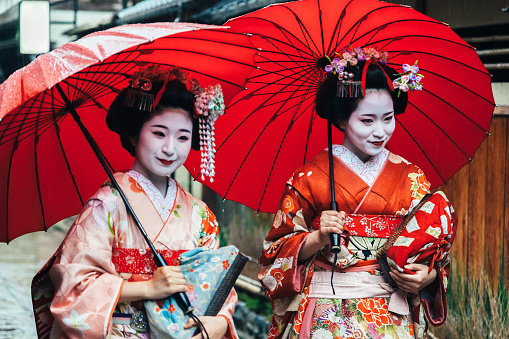
Geisha, Geiko and Maiko: What Visitors Should Know
Understand the differences between geisha, geiko and maiko, the traditions behind their profession and how visitors can experience this part of Japanese culture respectfully.